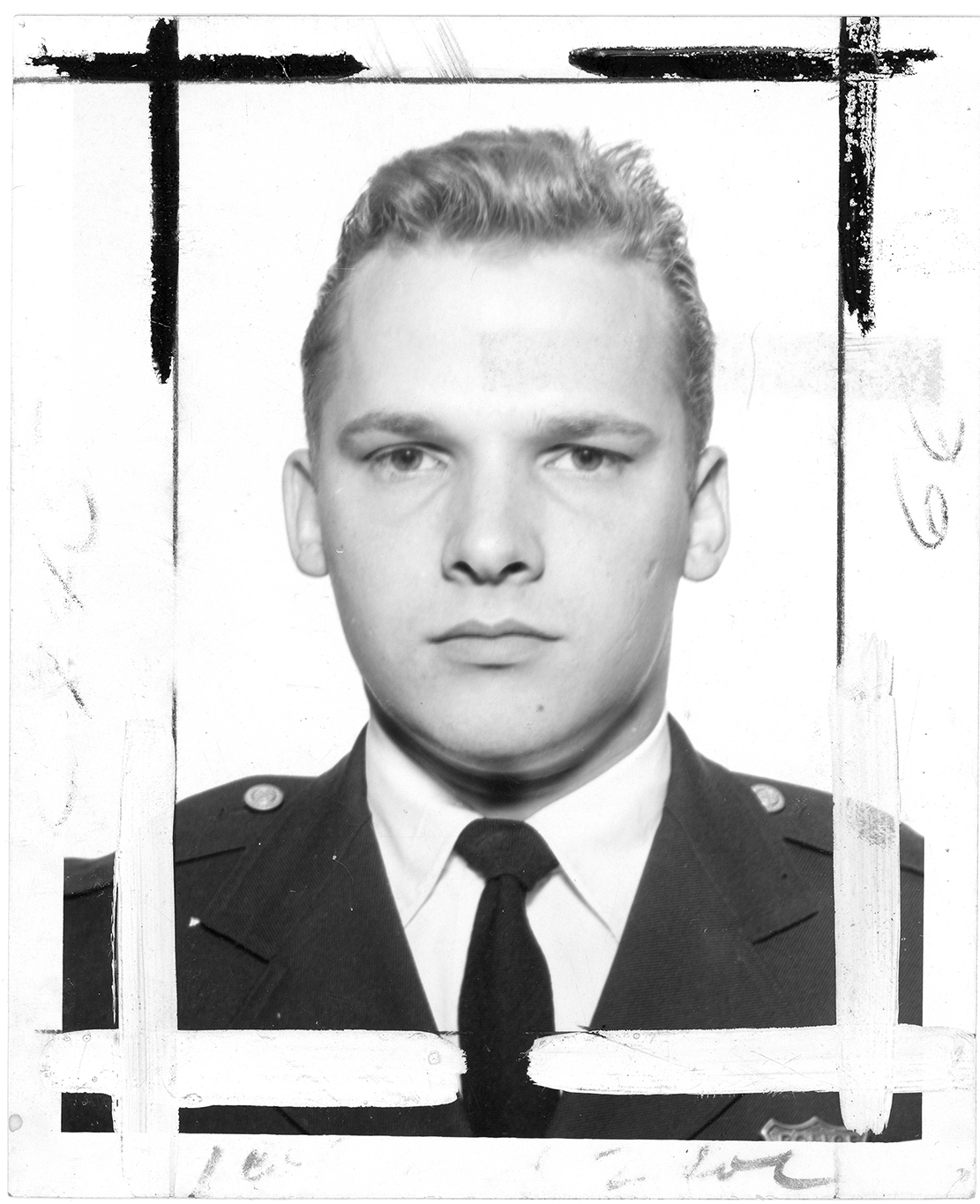
1900 - 11 June 1900 - We lost our Brother Patrolman Michael W. Ryan
1900 - The interesting thing about the Board of Police Commissioners and eventual single Commissioner is that the Commissioner(s) for the City of Baltimore were to be chosen and appointed by the Governor for the State of Maryland.
1900 - 1 Feb, 1900 - Northern District History - 1900 The Northern District was first opened at Cedar [Keswick] and 34th Street on 1 Feb 1900 at 8am ran by Capt. Gittings, Lieutenants Henry and Dempsey; Round Sergeants will be, Warden for Day Duty, and Moxley for Night Duty. At the time they began with 50 officers. It remained at the Cedar [Keswick] location until 2001 when it moved to its current location at 2201 W Coldspring Lane.
1900 - 7 May 1900 - George M Upsher, Edward H Fowler, and John T Morris
1900 - George M. Upsher, was one of our Baltimore City Police Commissioner from 1900-1904
1901 - 8 October 1901 - Thomas F Farnan Deputy Marshal was Acting Marshal from Oct 8, 1901 - Aug 7, 1902
1902 - 20 May 1902 - We lost our Brother Police Officer Charles J. Donohue
1902 - 21 August 1902 - "1000 members of Police Department to re-take Oath" - The entire department was forced to re-take their oath of office, as prior to this day, they had been improperly and illegally sworn in, and this was the case for 35 years. (See - BPD News under the Insight Drop-down Tab)
1902 - 8 October 1902 - Thomas F Farnan, Appointed Marshal from Oct 8, 1902 - Aug 8, 1914
1904 - 7 February 1904 - The Great Baltimore Fire raged in Baltimore, Maryland, United States, on Sun, Feb 7 and Mon, Feb 8, 1904. 1,231 firefighters were required to bring the blaze under control, both professional paid truck and engine companies from Baltimore City Fire Departments BCFD and volunteer fire companies from the surrounding counties, along with some out of state units that came in on local railways. The fire destroyed a major portion of central Baltimore City, to include over 1,500 buildings covering an area of some 140 acres. It spread from North Howard Street on the west, north to the retail shopping areas on Fayette Street and began moving eastward as it was pushed by prevailing winds. Baltimore Police not only helped to fight the fires, and evacuate buildings, but they also fault crime associated with this type chaos, in which looting almost always begins.
1904 - 23 March 1904 - George M Upsher, John T Morris, and Thomas J Shryock
1904 - 2 May 1904 - George R Willis, James H Preston, and Thomas J Shryock
1904 - James H. Preston, was one of our Baltimore City Police Commissioner from 1904-1908 (Gov. Warfield made him a member of the Board of Police Commissioners for Baltimore City, 1904-08) He went on to become Baltimore's Mayor in 1915
1904 - George R. Willis, was one of our Baltimore City Police Commissioner from 1904-1908
1904 - 26 November 1904 became the first time fingerprints were officially used (to catalog criminals) in the United States when John Randles was held over on a theft charge. He was printed by Sgt. John A. Casey who had recently returned from St. Louis where he had been trained in the technique, initially it was felt the system would work alongside the Bertillion system, but instead it was found to be more efficient and so it quickly replaced the Bertillon system except for two or three photos, initially they used a front on head-shot and two profile shots, now they only use two shots, the front on head-shot and a single profile.
1904 - 7 December 1904 - Fingerprint Identification Section - After becoming the first police department in the country to use the new Fingerprint System of identification when on 26 November 1904 Baltimore Police Department would go on to use 7 December 1904 as the inauguration date of our Finger Print Identification Section.
1905 - 27 July 1905, The "Beauty Squad" otherwise known as the "Traffic Squad" went on duty. Some wore a patch on their left sleeve of the Maryland Coat of Arms surmounted by an Eagle with outstretched wings. This was done to set them apart from other police in the area, an interesting note in the colors of the Calvert family Quarters, instead of Or and Sable (Gold and Black) they were given Orange and Black in error as the patch maker mistook Or for an abbreviation of Orange. Initially, our men didn't wear the patch, before long they all wore the patch and a distinct orange and Black cord on their helmets. To this day we still use Orange and Black for our ribbons and in other city logos and mottoes.
1905 - 16 January 1905, Might be the department's first recorded attempt at maintaining of our Department's History, when Patrolman William Burgess of the Central District began his new job in his new office as, "Librarian and Keeper of the Archives of the Central District," based on the following as we can see from the following Sun paper report:
1905 - 26 January 1905 - We lost our Brother Police Officer Mathew Boone * (1)
1905 - 25 December 1905 - We lost our Brother Police Officer Charles Spitznagle *
1907 - 1 August 1907 - The Department was to receive a Columbia Electric Automobile when complete the machine was put to use in the Central District as an Ambulance and Patrol (Paddy) Wagon. It was said to have been easy to run and easily made 16 miles an hour. Unlike the illustrated picture used to show Baltimore’s New Police vehicle, Baltimore’s Wagon would come with windows and curtains
1908 - 4 May 1908 Sherlock Swann, John B A Wheltle, and Peter E Tome
1908 - Col. Sherlock Swann, was one of our Baltimore City Police Commissioner from 1908-1910
1908 - 7 November 1908 - After 22 years, The Baltimore Police Department stop using the Police Helmet, (Bobby Cap), and goes to a more modern round, or oval top, police hat. From the Baltimore Sun - The Baltimore Police go from the Bobby Type Helmet to the more modern cap and Officers donned new uniforms, veteran Captains returned to old Districts, caps supplant helmets and Espantoons are in use once again.
1908 - 7 November 1908 - Also on this day and with the hat switch under the direction of Col. Sherlock Swann came a new hat device, it was on this day in 1908 that we dropped the Wreath style hat device moving to the hat device used today with the Coat of arms and badge number.
1908 - 28 December 1908 - Baltimore had laws passed to make consumer purchased fireworks illegal. The same year we saw immediate improvements in reduced injuries, while surrounding counties the same year with relaxed firework laws, there were deaths and dismemberment in 1904 with two young men each losing a hand in Baltimore County to fireworks. Marshal Farnan fought to introduce these laws and saved many lives and limbs as a result
1909 - 4 March 1909 - We lost our Brother Police Officer Thomas H. Worthington * (2)
1910 - 2 May 1910 - John B A Wheltle, Peter E Tome, and C Baker Clotworthy
1910 - 16 Sept1910 - We lost our Brother Police Officer John T. Tuohy
1910 - John B.A. Wheltle, was one of our Baltimore City Police Commissioner from 1910 -1912
1911 - 16 September 1911 - We lost our Brother Sergeant Joseph Smyth
1912 - 25 November 1912 - We lost our Brother Officer John McGrain *
1912 - 19 June 1912 - The first Women Officer was hired under the title of Policewomen was Mary S. Harvey, EOD of June 19, 1912 her hiring was followed by that of Margaret B. Eagleston July 22, 1912 (interesting side note on March 28, 1925 the Baltimore Sun reports - Two female members of department given first lesson in pistol shooting. They were Miss Margaret B. Eagleston and Mrs. Mary J. Bruff - A few days later Mrs. Mary Harvey, Miss Eva Aldridge and Ms. Mildred Campbell were also trained. So basically the first two woman officers hired by the BPD weren't trained in firearms until they had been on the force for 13 years!)
1912 - 4 April 1912 John B A Wheltle, Peter E Tome, and Morris A Soper
1912 - 6 May 1912 Morris A Soper, Daniel C Ammidon, and Alfred S Niles
1912 - Morris A. Soper, was one of our Baltimore City Police Commissioner from 1912-1913
1912/13 - The Baltimore police goes from Horse Draw "Patty" Wagons to motorized wagons. Oddly enough our first motorized wagons were manufactured by the same builder.
1913 - December 1913 - The Police Academy was established. - What later became known as our Police Academy, was first called “The Baltimore Police Department - School or Instruction” - It was housed in the Northern District - From a 1934 newspaper article referencing this "School of Instruction", it talks about the effect on its young police, initially they wrote, "It's not long, this eight-week course that they put the newcomers through, upon the fifth floor of the Police Building at Fallsway and Fayette, but it is both thorough, and exacting. And since its founding fourteen years ago by Commissioner Gaither; the school has served as something of a guide, and model for virtually every big city in the country," Departmental officials said.
1913 - 31 December 1913 James McEvoy, Daniel C Ammidon, and Alfred S Niles
1913 - James McEvoy, was one of our Baltimore City Police Commissioner from 1913-1914
1914 - 29 May 1914 - The Motor Unit was organized on May 29, 1914 - It began with just five members, Officers, Schleigh, Bateman, Pepersack, Vocke and Louis.
1914 - 17 October 1914 - The first female officer shot in the line of duty was Policewoman Elizabeth Faber. As she and her partner, Patrolman George W. Popp were attempting to arrest a pick-pocket on the Edmondson Avenue Bridge they were both shot. (An interesting side note, the first woman police hired by the Baltimore Police department were hired two years earlier in June and July of 1912, and none of the women hired received firearms training until 1925)
1914 - 28 December 1914 - Daniel C Ammidon, Clarendon I T Gould, and Alfred S Niles
1914 - 14 August 1914 - Robert D Carter Appointed Marshal August 14 1914 - until after 1917
1914 - Daniel C. Ammidon, was one of our Baltimore City Police Commissioner from 1914-1916
1914 - "Luxe" and "Morpheus" Baltimore’s first K9 - A little known fact, while not an official unit, Baltimore had two Police Dogs at their call when two Airedale Terriers from London came to enroll as members of the Police Force. Their owners learned two dogs were already here, privately owned, one belonging to Mr. Jere Wheelwright, and the other to Dr. Henry Barton Jacobs. “Luxe”, Mr Wheelwright's dog was a superb example of a highly trained equine aristocrat, big, powerful and intelligent to a degree that was truly remarkable. Morpheus Dr. Henry Barton Jacobs dog also a superb example of a highly trained K9. It would be 42 years before we would have an official K9 Unit, but off and on since 1914, we had, had Police Dogs used in both a private, and official capacity. But not until 1956 did we establish an official unit, with an official methodology that would go on to become world known as the best K9 unit.
1914 - November 1914 - Crosswalks were added to Baltimore's streets to enhance pedestrian safety and prevent "Jay-Walking." Due to a large number of injuries and deaths caused by people crossing streets in the center of the blocks, Baltimore followed suit with other large cities such as Cleveland and Detroit adding white lines at intersections for pedestrians to cross safely. Street intersections on Baltimore Street from Fallsway to Howard Street and Howard from Baltimore to Franklin Street have added these heavy white lines on all four sides of the intersecting streets. The lines extend from curb to curb, on the north and south sides of the street running East and West, and on the east and west sides of the streets running north and south. These lines extend from the sidewalk to the building line on all four intersecting corners.
1915 - 15 February 1915 - Baltimore begins its first ever Bike Squads, from four booths throughout the city, they worked two shifts, 4x12 12x8, they rode in 2 hour rotations, splitting time with officers in the booth. Dispatch phoned the booth, and calls were sent forward from there to the units on their bikes. The concept was to provide better police service to the rural homes in the city
1915 - 18 April 1915 - We lost our Brother Police Officer George C. Sauer
1915 - 8 July 1915 We lost our Brother Police Sergeant William F. Higgins
1915 - 21 September 1915 - We lost our Brother Police Officer Herbert Bitzel * (3)
1915 - 25 December 1915 - We lost our Brother Sergeant Paul Meeks
1916 - 26 January 1916 - 25 Semaphores [traffic signals] was ordered by The Police Board for street crossing - Used to regulate street traffic by the police department with the device first stationed at Howard and Lexington Streets to guide vehicles. The system was first used and tested by Patrolman Thomas Oursler of Baltimore's Traffic Division and both witnessed then ordered by Marshal Carter. This the original Semaphore was composed of two large green signs with the words "GO" and two intersecting red signs that read "STOP" it was operating via a pole inside of a pole that was stopped by a small handle, allowing the officer a way of turning that handle to change the sign providing an indication for intersecting traffic to direct their movement as the green GO signs, or the red STOP signs were brought into their view. These were topped off with a four-way railway lantern using red and green lenses. Later the Semaphore and officer were encased by a white metal drum that the patrolman could stand inside making him more visible to traffic. In the 1920's Commissioner Gaither would disband these Semaphores and go back to the whistle and point control that is used to this day.
1916 - 22 March 1916 Lawrason Riggs, Daniel C Ammidon, and Alfred S Niles
1916 - 1 May 1916 Lawrason Riggs, Edward F Burke, and Daniel C Ammidon
1916 - Lawrason Riggs, was one of our Baltimore City Police Commissioner from 1916-1920
1917 - 22 January 1917 - We lost our Brother Patrolman Michael Burns * (4)
1917 - Circa 1917 (The title Chief was Marshal in Baltimore City)
1918 - 13 February 1918 - We lost our Brother Police Officer Joseph Daniel Benedict
1918 - 19 March 1918 - We lost our Sister Police Matron Teresa Foll *
1918 - 6 July 1918 - We lost our Brother Patrolman George Kessler
1918 - 8 July 1918 - We lost our Brother Lieutenant Charles H McClean
1918 - Another 40 square miles of Baltimore County was annexed by Baltimore City. Baltimore County lost 34 of its 43 officers to the Baltimore City Police Department. The Canton, Arlington, Mount Winans, and Gardenville stations also became part of the city.
1919 - 16 Feb 1919 - We lost our Brother Police Officer Albert L. Borrell
1919 - 3 July 1919 - We lost our Brother Police Officer John J. Lanahan
1919 - 5 January 1919 - 33 Former Members of Baltimore County Police Department were accepted by the Baltimore City Police Department as the Annexation Act allowed 60 men to patrol the 50 square miles of the Annex, Area's such as "Canton" and "Highlandtown" formerly Baltimore County are now Baltimore City.
1920 - 2 October 1920 - We lost our Brother Police Officer Michael J Egan * (5)
1920 - In 1920 the Board of Police Commissioners was abolished and General Charles D. Gaither was appointed as our first Police Commissioner. Charles D. Gaither was one of our Baltimore City Police Commissioner from 1920-1937
1921 - 1 January 1921 - Police Commissioner Charles D. Gaither began the three-platoon system for Baltimore's police force, in less than six months time the eight-hour tour of duty for Baltimore policemen will be in force. With everything, he needed from the necessary Equipment Including at Least 30 motorcycles with sidecars (one article said several of the sidecars were equipped as prisoner transport vehicle.
1921 - 1 May 1921 - We lost our Brother Patrolman Edgar Shellito *
1921 – 6 May 1921 - First Electric Traffic Signal installed in the city at the Mall Crossing in Druid Hill Park. It was installed in place of the old manually operated Go-Go signals, and was first operated by Baltimore Park Police Officer R. W. Wilson on 6 May 1921
1921 - 4 March 1921 - Marine Unit Radios Installed - Commissioner Gaither announces telephone-radio communication from his Marine Unit. He announced he would be using Navy surplus telephone-radios. The radios would be installed in Deputy Marshal George G. Henry’s office, as well as both police boats the Lannan and the Carter. These were set up as one-way radio’s in which the Marshal could pass information on the two police boats. The boats could then go to one of eight police call boxes strategically placed on shore. It would be nearly two years later in June of 1923 that they would have the system converted over to a Two-way radio system. In this instance, they used the most current military surplus radio equipment, set first in the Robert D. Carter, and most of the Fire Department’s Fire boats with more boats to follow. Note: On 4 March 1933 - Radio Communication was established for the first radio communications system between Patrol Vehicles and a Central Dispatcher went into service using the same surplus telephone-radios Commissioner Gaither picked up for the Marine unit nearly 10 years earlier all of this first suggested to the Board of Estimates in September of 1931.
1921 - Early in the year of 1921 we tested the first signal light (aka Recall Light) on a call box that was located on the southeast corner of Baltimore and Charles Street. The signal (Recall Light) was made up of an electric light bulb, a washbasin to shade the light bulb and a Marine lens. The mechanism for the operation of this light was located in the old Central Police Station House on Saratoga Street near Charles Street, it consisted of an alarm clock for the flashing apparatus. This method of notifying the officer that he was wanted proved very successful. Every uniformed man from the inspector to the patrolman was enthusiastic over the results, by the end of first week of this "Magic Blinker" there had been a demand for more from the other seven districts.
1922 - The Rank of Round Sergeant was Discontinued in 1922
1922 - 18 July 1922 - Baltimore City Traffic Police Officers will no longer have to wear their Coats while directing traffic. All other officers would have to continue wearing their coats year round. Gen. Gaither said, "Other officers can dip into the shade, but our traffic regulators [officers] do not have that luxury." It wouldn't be until 6 June 1925 before all police would have the choice. It should also be pointed out that in both cases, it was only day-work police 8 AM to 4 PM shift that could shed their coats, in the high heat days of summer.
1922 - 17 September 1922 – The 1921 Recall Light experiment was so successful that we would put them in every district and on nearly every call box in the city. This would be a first time anything like this had been done anywhere in the country, and just as the experiment caused excitement in getting this program expanded to the entire city, it wouldn’t be long before other jurisdictions also had this system installed everywhere. By 1945 Baltimore had 269 recall light throughout the city on a much better model recall light than that 1st experimental model from 1921. Note: the first light was the idea of Gen Gaither, and was made by in-house maintenance, from spare parts, in fact, they used an alarm clock for the flashing apparatus.
1923 - We lost our Brother Police Officer John Edward Swift *
1924 - 2 March 1924 - We lost our Brother Police Officer Frank L. Latham
1924 - 20 June 1924 - We lost our Brother Police Officer Charles S. Frank *
1925 - 2 January 1925 - We lost our Brother Police Officer George D. Hart * (6)
1925 - 18 May 1925 - We lost our Brother Police Officer Patrick J Coniffee * (7)
1925 -1 November 1925 - We lost our Brother Police Officer Leroy L. Mitchell
1925 - 3 July 1925 - We lost our Brother Patrolman John E. Harris * (8)
1925 - 28 March 1925- Two female members of our department were given the first lesson in pistol shooting for our women officers. Baltimore policewomen received their first lesson in the use of firearms. Lieut. James O. Downes, expert marksman and instructor of the Baltimore Police Department's Pistol Team, explained the use of pistols to the two policewomen. Mrs. Mary J. Bruff and Miss Margaret B. Eagleston were the students who appeared at the Central police station yesterday. (Note:The first women hired in Baltimore to police, were hired in June and July of 1912. Two years later 17 October 1914, we had our first woman Officer shot in the line of duty, Patrol Woman Elizabeth Faber was shot on the Edmonston Ave Bridge, alongside her partner Patrolman Popp who was also shot, and still, it would take 11 years of women to be trained and armed)
1925 - 6 June 1925 - Commissioner Gaither issued an order, effective, 6 June 1925 that all members of the Police Department while working between the hours of 8 A.M. and 4 P.M. may remove their coats and go out in their "Shirt Sleeves" provided they wear White Oxford Shirts, and Black Ties. This privilege has been granted for Baltimore’s Traffic Officers since 18 July 1922.
1925 - 2 Aug 1925 - We lost our Brother Patrolman Irvin E Martz
1926 - 09-12-1926 Baltimore Police Headquarters and Central opened at Fallsway and Fayette St. where they remained until 09-12-1977 when Central moved to 500 E. Baltimore St. The building was demolished in 1984
1926 - 9 February 1926 We lost our Brother Police Officer Milton Heckwolf
1926 - 29 June 1926 - We lost our Brother Police Officer Webster E. Schumann
1926 - 12 July 1926 - We lost our Brother Police Clerk Thomas J. Dillon
1926 - 31 Oct 1926 - We lost our Brother Police Officer Charles W. Robb
1927 - 7 Dec 1927 - We lost our Brother Patrolman Harry Sullivan
1927 - 5 August 1927 - We lost our Brother Police Officer William F. Doehler
1928 - 12 February 1928 - We lost our Brother Sergeant George M. J. May
1928 - 22 February 22, 1928, The first vehicle actuated control was tried out in Baltimore. (To the best of our knowledge this was the first vehicle actuated signal insulation in the world.) - This was an automatic control were a brake attachment and two funnels placed on poles on the right-hand side of the cross street, ordinary telephone transmitters being installed inside the funnels. These transmitters being connected to the sound relay, which when disturbed by noise, for example, the tooting of horns, blowing of whistles, or the sound of voices would actuate the sound relay, releasing the break on the automatic control permitting the motor to run. This would change the signal which had been green on the main street to amber, then to read, permitting the side street traffic to move out on the green. It would automatically reset to red. This device was invented here in Baltimore. - This control would always restore itself back to the main street green, then the break would set and the signal would remain green on the main street until disturbed again by sound. Several of this type were installed, one being at Charles Street and Coldspring Lane, another at Charles and Belvedere Avenue
1928 - 28 June 1928 We lost our Brother Sergeant William Nicholson
1928 - 19 November 1928 - We lost our Brother Sergeant Joseph F. Carroll
1929 - 26 July 1929 - We lost our Brother Patrolman James M. Moore
1930 - 7 May 1930 - We lost our Brother Patrolman Robert L. Osborne
1931 - 7 January 1931 - We lost our Brother Police Officer John P. Burns
1931 - 10 Nov, 1931 - We lost our Brother Captain Edward J Carey
1931 - 6 Dec, 1931 - We lost our Brother Police Officer Howard Pitts
1932 - 2 January 1932 - We lost our Brother Police Officer William A. Bell
1932 - 5 March 1932 - We lost our Brother Patrolman Charles R. Bozman
1932 - 4 October 1932 - We lost our Brother Police Officer Thomas F. Steinacker
1933 - 21 April 1933 - We lost our Brother Police Officer John R. J. Block
1933 - 7 March 1933 - We lost our Brother Police Lt. Cornelius J. Roche
1933 - 9 March 1933 - We lost our Brother Police Capt. Charles H. Burns
1933 - 4 March 1933 - The First Radio Communications system between Patrol Vehicles and Headquarters took place while testing between the Northern District located at Cedar Ave and 34th St [Later changed to Keswick & 34th Street] from Central Dispatch, Broadcasting from Police Headquarters. Everything went on the air for the first time at noon on 4 March 1933 - Station WPFH (Police Broadcasting Station - Spent the morning making the tests using the 19 vehicles that had been equipped with receivers. An Acronym was made for WPFH - Wonderful Protection For Homes- Note Commissioner Gaither first suggested this system to the Board of Estimates in September of 1931
1934 - 12 February 1934 - We lost our Brother Police Officer John Blank
1934 - 5 September 1934 - We lost our Brother Serge Michael McSweeny
1934 - 2 November 1934 - We lost our Brother Police Officer John A. Stapf
1934 - 20 December 1934 - We lost our Brother Police Officer Henry W. Sudmeier
1935 - 14 February 1935 - We lost our Brother Police Officer Max Hirsh
1935 - The Police Department's Traffic Section including the Mounted Unit were issued Pith Hats a kind of Safari Helmet which was not well liked by many as they seemed to blow off the officer's heads in even the slightest of winds, causing officers to chase more helmets than criminals while the head wear was in use.
1935 - 31 Oct 1935 - We lost our Brother Police Officer Arthur H. Malinofski
1935 - 22 Nov 1935 - We lost our Brother Patrolman James P. Lennon
1936 - 16 February 1936 - We lost our Brother Patrolman Arthur R. Cornthwaite
1936 - 19 June 1936 - Seven motorcycle policemen will have inaugurated the new all-night motor-cycle patrol of the city beginning in evening 19 June 1936 at 9 o'clock, it was announced a day earlier on 18 June 1936 by Capt. Hamilton Atkinson, commander of the traffic Division at the time. He said, they would have remained on duty until 5 AM.
1936 - 9 October 1936 - We lost our Brother Police Officer Leo Bacon
1936 - 29 October 1936 - We lost our Brother Police Officer Carroll Hanley
1936 - 28 December 1936 - We lost our Brother Police Officer John T. King, Jr.
1937 - 31 December 1937 - We lost our Brother Police Officer Thomas J. Barlow
1937 - 17 November 1937 - We lost our Brother Capt. Charles A. Kahler *
1937 - First African American Officer Violet Hill Whyte, became Baltimore Police Department's first African American officer she worked out of the Western District for her 30-year career with the department.
1937 - William Lawson, was one of our Baltimore City Police Commissioner from 1937-1938
1937 - 28 May 1937 - For the first time in the history of the Baltimore Police Department, women have been advanced to the rank of Sergeant - Mrs. Cronin and Misses Lillie, Lynch and Ryan Promoted, The women, four in number, joined the force during or immediately after the World War, when there was a shortage of men, and functioned for a time as telephone and signal operators. Under terms of a bill signed Friday ( by Governor Nice, they will hereafter enjoy the rank and the pay, which is $46.50 a week as against their previous $40-of sergeants.
1937 - 21 Aug 1937 - Shotguns were first put in radio patrol cars in 1937 the shotgun used at the time was the Winchester 1897. They only had 47 radio cars city wide at the time, training for the shotgun was done at Saunders Range in Glen Burnie. If officers couldn't qualify, they would be sent back to foot patrol and someone else would be given a chance. Training for officers to qualify with the shotguns began on 21 Aug 1937.
1937 - 15 Oct 1937 - The Baltimore Police Crash Unit begins
1938 - Robert F. Stanton, was one of our Baltimore City Police Commissioner from 1938-1943
1938 - 21 February 1938 - The Accident Investigation Unit was established on February 21, 1938.
1938 - 25 Mar 1938 - We lost our Brother Patrolman Henry E. Auld
1938 - 5 July 1938 - Baltimore Police initiate the “Vice Squad” a name for the unit was going to be, the “Clean-up Squad” set up under the concept of preventing or reducing STDs – The unit was began within hours of a report made to the Grand Jury. Newspapers of the times speculated that there was an underlying reason for this squad, and that it had more to do with combating organized crime, and that it resulted from two tavern bombings, on Druid Hill Ave and Whitelock St. The other on Woodyear St.
1938 - 28 July1938 - The first African American male officers hired were Walter T. Eubanks Jr., Harry S. Scott, Milton Gardner, and J. Hiram Butler Jr. were hired in all of whom were assigned to plainclothes
1938 - 1 Nov 1938 - We lost our Brother Chief Engineer Joseph Edward Keene
1939 - 5 May 1939 - We lost our Brother Patrolman Charles W. Frizzell
1939 - 12 July 1934 We lost our Brother Detective Sergeant Raymond Golderman
1940 - 13 June 1940 - We lost our Brother Police Officer William L. Ryan
1941 - 11 January 1941 - We lost our Brother Capt. Havey Von Harten
1940's - In the 1940's the Police school, the predecessor to the Police Academy started using the motto "SERVICE WITH HOPE OF HONOR AS REWARD" This was seen on a banner in several class pictures, and when speaking to the son of one of the class members from those days his father told him it was the police school motto, and one that had stuck with him his entire career. In learning of the motto, one can't help but think of how impactful, the motto is and just how strong it is. After all, what more could any of us want than honor. So we adapted it along with the departmental motto, "Every Ready - Ever Faithful - Ever on the Watch" as our motto's for the Baltimore Police Historical Society. But both got their start elsewhere in the department through our past.
1941 - Auxiliary Police Force Est. In December 1941, after Pearl Harbor our Police Commissioner (Robert F. Stanton) realized he would be losing a lot of his men to the war effort, so he quickly organized an "Auxiliary Police Force" a unit of Civilian Defense Organization, which now has a membership of approximately two thousand persons, whose services are on a strictly voluntary basis without remuneration of any character. These men are selected from owners of big business, and executives-men in all walks of life including laborers and the unemployed (if you meet the requirements it doesn't matter what you do for a living, your help is welcome). In 1941 they originally provided at their own expense, uniforms and patrol box keys etc. The department furnished badges, whistles and nightsticks. They receive ten hours training in first-aid, two hours instructions in handling of bombs, and at least six hours instruction in police work, during which period they are assigned to work with the regular uniformed patrolmen. They were required to report to various districts and to perform two hours actual police duty assigned them by our District Captains. The purpose which the Auxiliary Police was serving and the manner in which its members have discharged its duties are worthy of the highest commendation, for it has been a most effective instrument in aiding in the preservation of law and order. Cooperation between this unit and the regular uniform force are. Basis for the progress made in combating crime. After the war there was a bit of dissension among the Auxiliary Police Force and the regular force
1942 - Oct 1942 - Baltimore's Ballistic/Brass Button Ban - Needing all the "Brass" our country could get it's hands on for use in our ammunition during the War efforts the WPB [War Production Board]. Takes a certain kind of Twinkling from the coats of our handsome agencies young officers during their first few months on the streets as they will be using black buttons instead of the polished shiny look of a young officer as he first works Baltimore's st, the way one might think of a Navy Pea Coat. This says more about times in America than it does the Police Department, obviously, our police can enforce the laws regardless of what they wear, but it is nice to see them in full Class A, and other uniforms.
1943 - 13 June 1943 - We lost our Brother Police Officer William J. Woodcock
1943 - 9 July 1943 - Baltimore Police Department put a "Dog-Pole" in the trunks of patrol cars to help secure dangerous dogs while waiting for SPCA to take the animal off their hands
1943 - 12 Aug 1943 - Baltimore Police Department's Taxicab Bureau began late in the week of 12 Aug 1943, with the issuance of a new type of badge and identification card. William Monaghan, became the supervisor to this newly organized branch within Baltimore City's Police Department. This unit was the brainchild of Police Commissioner Hamilton Atkinson. Of the 1450 Cab drivers in Baltimore during the year 1943, only 990 had applied for a license, due to their past criminal records 45 of the 990 were denied the right to a Baltimore Police Taxicab License. The Identification Cards and Badges issued at the time were described as having been, "Hermetically" sealed between two transparent sheets of plastic to prevent their having being tampered with.
1943 - 7 November 1943 - We lost our Brother Police Officer William S. Knight
1943 - 16 November 1943 - We lost our Brother Detective Patrolman Charles H. Reid
1943 - African American officers were finally allowed to wear police uniforms, and by 1950, there were fifty African American officers in the department.
1943 - Hamilton R. Atkinson, was one of our Baltimore City Police Commissioner from 1943-1949
1944 - 29 January 1944 - We lost our Brother Police Officer Joseph Waldsachs * (9)
1944 - 19 July 1944 - Radio cars are marked for the first time departmental history. The Commissioner at the time Hamilton Atkinson said the cars could not be missed as they will have 12" letters running down both sides of the cars that simply reads "POLICE" NOTE - Accident investigation vehicles were marked prior to the 1944 radio cars
1944 - 7 October 1944 - The Baltimore police switches from the round, or oval top police caps that were worn for a little more than 30 years after the "Bobby Cap" type helmet, to the current "Octagonal" or "Eight point" hat we wear today.
1945 - 2 June 1945 – Policewoman Ada F Bresnan of the Baltimore Police Department, became the first woman elevated to the rank of Sergeant. Sgt. Bresnan was appointed to the department in November of 1929.
1945 - 17 August 1945 - We lost our Brother Police Officer John J. Burns
1945 - 10 September 1945 - We lost our Brother Police Officer John B. Bealefeld
1946 - 1 March 1946, We lost our Brother Patrolman George H. Weichert *
1946 - 27 June 1946 - We lost our Brother Patrolman James M Shamer *
1946 - 20 November 1946 - We lost our Brother Police Officer Elmer A. Noon
1946 - 30 Dec 1946 - Mr Simon Fried became the 1st civilian to receive an Official Sworn Officer's Commendation. Click HERE
1947 - 13 January 1947 - We lost our Brother Police Officer Fred R. Unger
1947 - 13 October 1947 - We lost our Brother Police Officer Charles Hart *
1947 - 25 January 1947, The Baltimore Police Department promotes one of the Department's First African American Officers to the Department's first African American Police Sergeant. Patrolman James H. Butler Jr. now Sergeant Butler was formerly a College Football Player until hired by Commissioner William P Lawson, on 28 July 1938, as he was among the first three African American males hired by the Department.
1948 - 13 February 1948 - We lost our Brother Police Officer Joseph Daniel Benedict
1948 - 1 October 1948 - We lost our Brother Police Officer Thomas J. Burns
1948 - 30 December 1948 - We lost our Brother Police Officer John W. Arnold
1948 - Crime Lab Est. The Baltimore Police Department’s 1st Crime Lab
1949 - 4 April 1949 - We lost our Brother Police Officer James L. Joyce
1949 - 16 October 1949 - We lost our Brother Police Officer Thomas J. O'Neill
1949 - Beverly Ober, was one of our Baltimore City Police Commissioner from 1949-1955
1950 - 4 August 1950 - We lost our Brother Police Officer Charles M. Hilbert
1951 - 6 January 1951 - We lost our Brother Police Officer Roland W. Morgan
1951 - 23 June 1951 - We lost our Brother Patrolman Arthur Weiss
1951 - 7 April 1951 - Central Records was established and Central Records Bureau was created
1951 - 19 April 1951 - Meritorious Service Board created
1951 - 1 June 1951 - Medical [Section] Bureau Established
1951 - 5 Sept 1951 - Marks the end of the Police Department’s 110-year-old system of using docket books to log prisoners at district station houses. The bound books, which have been used since before the Civil War to record the vital statistics of those arrested in Baltimore were being replaced with loose-leaf dockets. The change, ordered by Commissioner Beverly Ober, began on 5 September 1951 in the Central District. Under the new setup, as many as 24 additional clerks would be needed to type the information now entered in longhand on old style the docket books.
1952 - 29 April 1952 - Selective Enforcement Parking Unit - Officers using 3 wheel ServiCars that specialized in parking violations. They would be replaced 9 years later on 8 May 1961 by Meter Maids.
1952 - June 1952 - Crossing Guards added, hired in June of 1952, trained and ready to take their posts in September at the start of the new school session. Guards made $25 a week to be paid bi-weekly during school sessions.
1952 - Armory Est. in 1952 the Gun-shop (now called the Armory) was established
1952 - 28 June 1952 - The department started using a Single Rocker type shoulder patch, it was black with yellow/orange trim, and lettering that read, "Baltimore City Police." This was to be worn on the left shoulder of the officers coat, or blouse (jacket). The original concept was to also have a second patch similar to this but for the shirt. The shirt version was being studied and would have had a Blue background with White lettering/outline. On the 28th of June 1952 these patches were issued to Officers in training, Officers on the street would get them not long after at a cost of 30 cents each.
1953 - Mrs. Mary E. Hoy, Baltimore City Police Crossing Guard received the department's highest award “The Medal of Honor.” During that time School, Crossing Guards were employees of the Baltimore Police Department.
1953 - 1 August 1953 - We lost our Brother Police Officer James L. Scholl
1954 - 15 Jan 1954 - Fallen Officer Plaque First Issued/Presented - Police Commissioner Beverly R. Ober holding plaque which he will be presenting to Mrs. Margret A. Scholl, widow of the Eastern District Sergeant James L. Scholl, who died from a gunshot wound last Aug 1st [1953]. The plaque carries Sergeant Scholl's badge, Baltimore Police Sergeant's Badge Number 118, and an inscription reading; "Baltimore Police Department, Medal of Honor. Sergeant James L. Scholl. Appointed 1 June 1942, Died in the Discharge of His Duty 1 Aug 1953. His Service Honored the Department." The Commissioner said, this is the first such plaque to be made in Honor of a Fallen Officer in this agency, but that Similar Plaques will now be Awarded in all such cases. Sergeant Scholl's was the first award of its kind within the Baltimore Police Department.
1954 - 14 February 1954 - We lost our Brother Police Officer Alfred P. Bobelis
1954 - 19 April 1954 - We lost our Brother Police Officer Aubrey L. Lowman
1954 - 1 July 1954 - We lost our Brother Police Officer Walter D. Davis
1954 - Mobile Crime Lab Est. May of 1954 The Mobile Crime Lab Unit was established.
1954 - 1 July 1954 - Radar Unit Began it consisted of 2 cars 3 officers. Warnings were given for the first several weeks after that summons were issued.
1954 - July. 1954 - The practice of paying salaried in cash was stopped and paying by check began
1955 - 24 October 1955 - We lost our Brother Sergeant James J. Purcell
1955 - 1 November 1955 - After nearly 20 years and four police commissioners arguing for and against Parking meters; Parking meters are finally signed into law and on 1 Nov 1955 the first parking meter was installed and went into use on North Ave in Baltimore City. These meters were enforced by Baltimore Police department's Traffic Enforcement Section.
1955 - 28 November 1955 - Polygraph Unit Est. First in the State Commissioner Hepbron brings the machine to help build a polygraph unit within the Rackets Division of the department. (In 1966 this unit would be transferred to the Crime Lab unit - Before the move to Crime Lab this little machine will cause headaches for the commissioner that brings it to Baltimore)
1955 - James M. Hepbron, was one of our Baltimore City Police Commissioners from 1955-1961
1956 - 6 Feb 1956 - - We lost our Brother Patrolman John Neill
1956 - 27 May 1956 - We lost our Brother Police Lieutenant William P. Thompson
1956 - 29 June 1956 - Patrolmen were able to wear open-neck, short-sleeve oxford style shirts. The department was quick to stress that only a specific model oxford shirts had been approved, thereby eliminating the danger of patrolmen selecting the more brightly colored type shirts of their liking.
1956 - 29 September 1956 - We lost our Brother Police Officer John R. Phelan
1956 - 17 October 1956 - The word "POLICE" was added in reflected tape to the rear of 200 departmental police vehicles. The idea was to both mark the vehicles, and to make them less likely to be struck from behind. When Commissioner Hepbron noticed an unusual number of parked patrol cars being rear-ended, he asked for suggestion to stop or reduce theses numbers. Inspector Leo T. Kelly, came up with the idea of adding 5" reflective letters rubber cemented to the rear of our cars make them more visible.
1956 - 10 to 17 October 1956 - The same week as the above POLICE letters were added, for the first time police vehicles were equipped with the same kind of flashing red roof lights as those that were in use by our Fire Department.
1956 - Baltimore’s K9 Unit was initiated - On Tuesday, December 11, 1956, an article was published in one of our local newspapers which was one of a series of articles written by one Martin Millspaugh pertaining to Scotland Yard. This article the last of a series was devoted to the use of police dogs in London. As a result of the letters and inquiries received by Commissioner James M. Hepbron, an article appeared in the Morning Sun on December 17, 1956 which briefly stated that Commissioner Hepbron was interested and saw the possibilities of using dogs in the Baltimore City Police Department. On December 18, 1956, two dogs (Turk & Major Gruntz) that had had previous training were offered to the Baltimore City Police Department and, with two officers (Patrolman Thomas McGinn and Irvan Marders) also with previous dog experience, the program was put into effect on an “experimental basis”. By the middle of January 1957, fourteen dogs had been acquired as potential candidates and fourteen men were selected and assigned to the K~9 Corps. These men were chosen as a result of a questionnaire which was sent to all members of the department asking for volunteers. These men and dogs were trained daily until March 1, 1957. At that time, they were put on the street on Friday and Saturday nights, working the areas where crime was most prevalent. Shortly after this, actually on April 17, 1957~ Commissioner Hepbron, considering the experiment a success, went before the Mayor and City Council and appropriations were made through the Board of Estimates which resulted in the K-9 Corps becoming a permanent part of the Baltimore City Police. (NOTE - 1914 - Baltimore was using private dogs, one such dog, the first ever recorded was "Luxe" privately owned but protecting Baltimore's citizens through canine power)
1956 - 30 December 1956 - K9 makes their first arrests, James Diggs, B/M 23. Major and Turk apprehend a suspect for breaking into a motor vehicle, and stealing contents. James Diggs, thought briefly about fleeing but quickly changed his mind while in the 400 Blk. of W. Franklin St. as he saw the sharp teeth, and fast legs of Turk, and Major Von-Gruntz (aka Major) Diggs changed his mind, giving the dogs their first arrest. The handlers at the time were Officers, Irvin Marders, William Kerbe, and Robert Johnson. Diggs was sentenced to 30 days, in Central Court for theft from a parked Motor Vehicle.
1957 - 27 Sept 1957 We lost our Brother Sergeant Charles E Gross
1957 - 9 October 1957 - We lost our Brother Police Officer John F. Andrews
1958 - 19 September 1958 - We lost our Brother Police Officer Robert K. Nelson
1959 - 1 Aug 1959 - Southeastern District Opens - The Southeastern District is the youngest of all of our districts, it was built in 1958/59 at its present location 5710 Eastern Ave
1959 - 11 January 1959 - We lost our Brother Police Officer Richard H. Duvall, Jr.
1959 - Baltimore's Park Police would disband, most members go to Baltimore Police Department where they retained their rank, their time, and their pension. Originally founded in 1862 to cover parks that fell outside Baltimore Police Jurisdiction.
1960 - January 1960 - Baltimore Police along with Maryland State Police would introduce the Breathalyzer into Maryland's fight against Drunk Driving. It would be used up until 1993 when it was replaced with the a unit called "The Intoximeter".
1960 - 16 November 1960 - We lost our Brother Police Officer Warren V. Eckert
1961 - In January of 1961, the Baltimore Police Department merged with The Park Police, to make one big police force that covered the city. This will happen numerous times throughout the department's history. Housing Police and now talks of taking on Baltimore School Police.
1961 - Bernard Schmidt, was one of our Baltimore City Police Commissioner from 1961-1966
1961 - 8 May 1961 - Baltimore police starts it's Meter Maid unit, They will work out of the traffic division of the Baltimore Police Department with 10 Meter Maids, under the direction of one Sergeant and one Lieutenant.
1961 - 8 Oct 1961 - We lost our Brother Patrolman John R Falconer
1961/66 - The police commissioner was in an elevator in the Headquarters building when an officer steps in, the officer turns his back on the Commissioner and faces the closing doors much the way anyone entering an elevator would. The Commissioner asked the officer if he knew who he was. The Officer apologized, saying he did not. The Commissioner introduced himself to the officer. Not long after this the tradition of a photo of the Police Commissioner hanging in the roll call room behind the Lieutenant's podium was begun. The Commissioner at the time was, Bernard Schmidt he served as Police Commissioner from 1961-1966 just before Donald Pomerleau - 1966-1981
1962 - 7 April, 1962 - We lost our Brother Police Officer Henry Smith, Jr.
1962 - 26 May 1962 - We lost our Brother Police Officer Richard D. Seebo
1962 - 2 July 1962 - We lost our Brother Police Officer Edward J. Kowalewski
1963 - June 1963 - Baltimore Police EVU (Emergency Vehicle Unit) was formed. EVU handled a ton of emergency situations, everything from providing equipment to light crime scenes, to handling deadly chemicals, and bombs, Aside from handling a bunch of dirty jobs, they were also our Bomb Squad.
1964 - 10 January 1964 - We lost our Brother Police Officer Francis R. Stransky
1964 - 6 February 1964 - We lost our Brother Police Officer Claude J. Profili
1964 - Mach 1964 - 24 March 1964 the department announced the introduction of 18 Remington 12-gauge pump-action shotguns. Serge. Freeman, a firearms instructor for the department, said, "98 of the new guns have been purchased as replacements for 1897 - model Winchester Shotguns which were taken out of use in the late 1940s. Those old guns," Freeman said, "were basically hunting guns with their 20 inch barrels shortened."
1964 - 11 September 1964 - We lost our Brother Police Officer Walter Patrick Matthys
1964 - 15 October 1964 - We lost our Brother Police Officer Teddy L. Bafford
1964 - 25 December 1964 - We lost our Brother Sergeant Jack Lee Cooper
1965 - 20 January 1965 - We lost our Brother Police Officer Charles R. Ernest
1965 - 19 November 1965 - Internal Investigation Division gets it's initial start labeled as "The Police Complaint Evaluation Board" Issuing its General Order - Regulation on (19 Nov 1965) authorizing anyone with a complaint to call into any of the districts or to the State police for a “supplemental report” to initiate investigation of police misconduct charges after the city police department has completed its inquiry."
1965 - 17 June 1965 - Baltimore Police begins it Cadet Program, the first Cadet was Edmund Bossle.
1965 - 22 July 1965 - We lost our Brother Police Officer Robert Henry Kuhn
1966 - 29 April 1966 - The Nameplate was first worn by City Police Officers on 29 April 1966 at 9 am. - In a program called"Know Your Police," which was initiated by Interim Police Commissioner George M. Gelston in which he ordered all officers to begin wearing a nameplate for identification purposes. An idea the Maryland State Police started 7 years earlier on the same day (29 April, 1959). At the time Commissioner Gelston felt it would improve the image of the police department. As a side note, Patrolman Edward Campbell would be the first City Officer to wear such nameplateas he posed for the Baltimore Sun a day earlier on 28 April 1966. I should add Officer Tom Wade posed for a similar picture in which Commissioner Gelston was seen pinning his nameplate on him.
1966 - 24 August 1946 - We lost our Brother Honorary Police Officer Simon Fried * 1*
1966 - The department itself had not fully integrated until 1966. Prior to 1966, African American officers were limited to foot patrols as they were barred from the use of squad cars. These officers were quarantined in rank, barred from patrolling in white neighborhoods, and would often only be given specialty assignments in positions in the Narcotics division or as undercover plainclothes officers.
1966 - Police Commissioner Donald D Pomerleau was appointed to the first of three six-year terms as our Commissioner, that's 18 years of the same Police Commissioner
1966 - 4 May 1966 - Along with Commissioner Pomerleau came the idea of "Police, Policing... Police", Internal Affairs, Internal Investigations, IID... IAD... call it what you like, but DP said, "Things will change, you may have been on the take yesterday, but you will not be on the take tomorrow, and if you are, you will be arrested just like any other criminal in Baltimore!" Some officers were smart and yielded to his advice, others were not so smart and ended up someplace alright, "That place was; their place in a perp walk 1966 style." 4 May 1966 - Inspectional Services Division was initiated
1966 - The FOP Lodge #3 Baltimore City Police was founded by Sgt. Richard Simmons, Earl Kratch and several others.
1966 - 1 July 1966 - The title/rank "Inspector" ends and the new rank Deputy Commissioner takes it place. The first three Deputy Commissioners, all former Inspectors, are George H Deuch, Leo T Kelly and Ralph G. Murdy
1966 - Donald Pomerleau, was one of our Baltimore City Police Commissioner from 1966-1981
1966 - November 1966 - In November of 1966 under Commissioner Pomerleau, the Department increases the speed of recruit testing and hiring. Instead of once a week testing, one could test any day of the week, and one night a week. After being qualified, instead of waiting months, or weeks for a class to start, qualified applicants were hired right away, and giving assignments to non-hazardous duties within the agency. This was because in the past they had lost qualified applicants to other agencies, or other career choices. Click HERE
1967 - The “Operations Unit” was formed, some called them “Flex Squads”. These special units one in each of the nine districts would go where the action is. “Operations Units” the special groups for each be commanded by Lieutenant, who will deploy the men as they are needed throughout the district.
1967 - 23 February 1967 – A bill to direct Donald D. Pomerleau, Baltimore Police Commissioner, to recognize the Fraternal Order of Police as the “Official Representative” of members of the force was introduced in General Assembly Today. Already pending is a rival measure designed to force recognition of a non-striking AFL-CIO union local of Baltimore police patrolman and sergeants.
1967 - February 1967 – The Baltimore Police Department instituted a tuition reimbursement program for personnel pursuing college degrees
1967 - 12 March 1967 – Under Commissioner Donald D Pomerleau, Patrol and Traffic Officers were permitted to take a half hour lunch break (workload permitted) Prior to this date, Patrol and Traffic Officers were not allowed a lunch break.
1967 -16 March 1967, Commissioner Donald D. Pomerleau, officially recognized the Fraternal Order of Police as the official organization to represent police officers within the department. - His announcement on his intent came while in Annapolis on 16 March 1967. A day when he, the Delegates, Senators, Organized Labor Officials, Fraternal Order of Police organizers, individual police officers, the Police Personnel Service Board and the United Baltimore City Police Wives; all claiming to speak in the best interest of the city, the department and its police.
1967 - 21 May 1967 at 8 am, Baltimore Police started a new emergency police number, it started in the Central District where those with an emergency were instructed to dial 222-3333 This number would remain in use until 1 March 1985 when the Baltimore Police officially began its use of the 911 emergency call system. Switching from SA 7-1200 to contact police in the event of an emergency to dialing 222-3333, this new number would last from this date in 1967 until 1 March 1985 when our 911 system was implemented
1967 - June 22, 1967, the Public Information Division was formed. The Division consisted of a Director, two full-time police officers and two civilian stenographers. The duties of the Director and his staff consisted of preparing and disseminating all news information and releases to the news media and the public. Preparation of the Annual Report as required by law and the bi-weekly Newsletter are part of the responsibilities of this Division
1967 - July 1967, one of the four Community Relations Store Front Operations was implemented. The purpose of these centers is to reach the community on an intimate basis. This was the first such project in the Northeastern region of the United States.
1967 - In August of 1967 the Fleet Safety Program was initiated
1967 - 25 January 1967 - We lost our Brother Police Officer William J. Baumer
1967 - 10 February 1967 - We lost our Brother Police Officer Frederick K. Kontner
1967 - 21 August 1967 - We lost our Brother Police Officer John C. Williams
1967 - Baltimore Police opens its first "Safety City" to teach kids how to safely cross streets
1968 - Due to the number of auto accidents involving patrol vehicles, Police Commissioner Donald Pomerleau decided to remove Sirens from two-thirds of the department’s fleet. This action was frowned upon by City Hall, and the MVA. The MVA pointed out that it was illegal still it would take years for the commissioner to reverse his decision.
1968 - 18 April 1968 - We lost our Brother Detective Richard F. Bosak
1968 - 12 November 1968 We lost our Brother Sergeant Frant Ankrom *
1967/68 - Was the last year for the Rocker style shoulder patch. (Baltimore wore a single shoulder patch on their left arm) Was the first year for the Blue Baltimore "City" Police style shoulder patch. (At this stage Baltimore was still wearing a single shoulder patch on their left arm.)
1968 - 20 Feb 1968 - Baltimore Police started in-service training for it's Detectives. After a report revealed officers had only a 22% clearance rate on property crimes, in comparison to persons crime which had clearance rates closer to 60% at the time. The disparity in the clearance rate between the two categories was explained by the fact that victims of violent crimes often know, or can identify their attackers. The 40 hour class was launched on 20th of Feb 1968 in the department's education and Training Division. It taught law, and investigative techniques.
1968 - 4 March 1968 - Baltimore Police initiated a new P.O. Box information system. Anyone with information that they wanted to get to the police and keep their name out of it could simply write in a letter and send it the new P.O. Box number. To make things easier on the public, the new emergency number introduced almost a year earlier and the P.O. Box would share the same numbers; the phone number at the time was 222-3333 and the P.O. Box number was the same, P.O. Box 222-3333. Letters sent to that address would go directly to the Major in charge of the Inspectional Services Division.
1968 - September 1968 - The department of education and training center, itself relatively new, evolve into a modern version of the Baltimore police academy and became the first fully accredited academy of its type in the country. The American University in Washington recognized portions of the training program and offered up to 12 credits for completion of specified courses in a program that combined 14 weeks of classroom work, and 6 weeks of Field Training. Three of the credits could be earned at Morgan State University. The course for credit function was later transferred to the University of Baltimore, where it has remained. From time to time officers are sent to the FBI National Academy at Quantico Virginia for courses.
1968 - 17 May 1968, the department installed a National Crime Information Center (NCIC) terminal permitting direct access to the storehouse of information on wanted persons, stolen vehicles, stolen weapons, and identifiable stolen property at the Federal Bureau of Investigation headquarters in Washington, D. C. This system enables inquiries from officer• on patrol to be answered within seconds.
1968 - 12 Sep 1968 - Baltimore take the first flight in what would become our Aviation Unit, and Officers would soon look to the skies for Foxtrot's help in fighting crime.
1968 - 23 September 1968, The department officially took possession of its IBM System 360 computer
1968 - 4 November 1968, - As a Nations First – Baltimore Police Department begins In-service training - The education and training program expanded beyond the traditional entrance level training for recruits to a 37 hour annual In-Service Training course attended by all personnel from the rank of patrolman through captain - The thirty-seven hour In-Service training course, designed to indoctrinate our police officers in the latest developments and technique in professional law enforcement.. The concept of in-service training demonstrates the department’s goal in the development of an officer's capabilities to function amid the complexities of an ever-changing society. This coupled with roll-call training keeps our officers up to date, on the most current of police procedures.
1968 - November/December 1968 Gunpowder is open to the Baltimore Police Department for firearms training.
1969 - In May of 1969, we have our first father/daughter on police department. Officer James F. Stevens and Policewoman Patricia A. Loveless
1969 - June 1969 - Baltimore Police Call Boxes went from the old, Ticker Tape manual system to the Rotary Dial up system. They took out the antiquated Candle-Phone units and put in a simple black rotary phone. The Call Box Switchboard handled all hourly control calls for the Patrol Division. Call Box Operators also distributed calls through their manual switchboards to many extensions of the departmental telephone networks. That system was replace in June of 1969 with the Dial Type Call Box network. The Dial Direct system allowed officers to go to any Call Box and dial directly to any extension of the Intra-departmental telephone system.
1969 - 20 June 1969 - We lost our Brother William Wilder
1969 - 26 July 1969 - Baltimore Police announce their search for uniforms for their 48 sworn Baltimore Policewomen by the end of the year.
1969 - In October of 1969, we have our first female officer honored by the Criminal Justice Commission. Police Woman Mercedes Rankin
1969 - 10 October 1969 - Lt. Dennis P. Mello is promoted, making him Baltimore Police Department's first African American Captain, a new rank, and new position, which he took at Baltimore's Western Police District.
1969 - In October of 1969 the BPD started it's "Agent Program" reserved for officers that have earned a Bachelor's Degree from an accredited College. The rank was created to encourage those with college degrees to join the department and those already employed to seek a higher education.
1970 - 16 January 1970 - We lost our Brother Police Officer George F. Heim
1970 - 24 March 1970 - We lost our Brother Police Officer Henry M. Mickey
1970 - 24 April 1970 - We lost our Brother Police Officer Donald W. Sager
1970 - The Arson Unit was initiated in February of 1970.
1970 - The STOP Squad was initiated in mid February 1970.
1970 - Today 30 April 1970 at 3:30 am, Baltimore Transit Company BTC became Metropolitan Transit Authority or what's best known as MTA
1970 - Fox Trot Est. The Department Aviation Unit "Fox Trot" was officially formed and began flights.
1970 - 1970 - 1 July 1970 Baltimore Police went to an all Blue light emergency signaling system on their patrol cars and emergency vehicles. Twenty-four years later on 28 May 1994, with a new car design, the department did away with the solo blue lights and went back to the traditional red and blue lights.
1970 - Helen Mackall - becomes second Crossing Guard Medal of Honor recipient, first African American women to be awarded the medal, she lost her leg saving a child that was nearly run over. During that time School, Crossing Guards were employees of the Baltimore Police Department.
1970 - Aug 1970 - Police Cars are De-Flagged - If you have ever wondered why Baltimore Police cars lack the American Flag, it goes back to Aug 1970 when Police Commissioner Donald D. Pomerleau ordered the removal or all American flag insignias from Baltimore city police cars. The reason was said to be due to their wearing out quickly, becoming dull and looking torn and tattered. The Commissioner, however, did rule that city officers would be able to continue wearing American flag lapel pins on their uniforms. Note this light scheme would remain unchanged until the mid 90's)
1970 - 3 December 1970 - Police Commissioner Donald D. Pomerleau introduced the Department's first Police Flag... it has remained our flag since that time with no changes ever since... (BTW the flag cost $180 at the time, and now the same quality flag would cost more than $700
1971 - The Citation of Valor Baltimore Police Department's Purple Heart was started by Commissioner Donald Pomerleau in 1971 but awarded retroactively to 22 Sept 1966, to include those persons that could have received this award. Originally this was only awarded to those officers that have been shot in the line of duty, all other, line of duty injuries did not qualify; stabbings, razor blades, beat unconscious with a club, or run down by an automobile, was not enough. If the officer wasn't shot he was not eligible for the Citation of Valor. Also, this was the first award that in our agency that was distributed directly from the Police Commissioner without any discussion with the Meritorious Conduct Board. At some point, it was realized that the sacrifices of our seriously injured officers had to be recognized and so the criteria was expanded to include stabbings, cuttings, or any injuries that could result in death or permanent disability while acting in their official capacity are eligible for this award.
1971 - 12 June 1971 - We lost our Brother Police Officer Carl Peterson, Jr.
1971 - 1 August 1971 - We lost our Brother Lieutenant Martin Webb
1971 - 26 March 1971 - Two Hughes 300-C helicopters were formally accepted and registered for the department. The two new helicopters raised to three the number of such craft available for tactical deployment in the department's continuing efforts to combat crime. Purchased under a Federal grant of $100, 000, the Hughes 300-C models represent a maximum combination of utility and modernization within the department's crime-fighting efforts
1971 - In June of 1971 - We had our first K9 Dog killed in the Line of Duty. "Shane" RIP
1971 - 27 July 1971 - the Community Relations and Youth Divisions were combined into a new division known as the Community Services Division. The creation of this division and the resulting centralization of Administrative functions provides an effective channel of communication between the Police Officer and the community he serves. The major thrust of our expanded Community Services function is aimed at our young people. It is the Division's job to keep clear the channel of communication between officers and the community. The accomplishment of this mission is aided by the division's two Summer Camp operations located at Camp Perkins and Camp Ritchie. Also, our Officer Friendly Program geared for its first full year of operation.
1971 - The department begins its Bomb Squad Unit under the supervision of Lt. Karner - Before starting our own Bomb Squad, bomb-dismantling missions were handled by Army experts. A member of this unit invented a device used to more safely detonate bombs. It was made from a shotgun shell, a design of his own design, made right here in Baltimore, and would eventually go on to be used worldwide (Another Baltimore First).
1971 - 30 September 1971 - The Cell Block and District Court closed after 12 years in operation. The courthouse and the 24 adjoining cell-blocks in the Northeast district building will be converted into a detention center for women and offenders under the age of 16. Replacement facility the new facility will replace the present women’s block and juvenile cells on Pine Street, which have been condemned. Note: The court closed without ceremony at the end of a typical day’s business, during which 18 Defendants faced 52 charges ranging from shoplifting to disorderly conduct, false pretense to indecent exposure and assault to violation of probation. The last case heard in the NE Court Room was against Donald F. Goetz, who was charged with burglarizing a house in the 1600 block of these Coldspring Lane.
1971 - 22 October 1971 - The Charles D. Gaither (boat) is retired from the Police Department and starts a new career as a fire boat
1972 - 11 January 1972 - The Cadet shoulder patch was changed from the grey rocker patch with blue letters to the more modern patch however it had the word CITY on it. They also removed a grey stripe that was on the cadets pant legs
1972 - 1 March 1972 - The department initiated the experimental and innovative program of bicycle patrol. It was learned that the bicycle patrol possesses all of the advantages of foot patrol with an added advantage of mobility. Also, the use of the bicycle provided great potential for more citizen-police contact, a new dimension in establishing good community relations.
1972 - 1 April 1972 - This may sound like a joke but it’s real, and it works – On April Fool’s day 1972 came, Operation Identification was formally initiated by the department. The Operation, encourages citizens to mark their property with an electro-engraver and record the make and serial numbers on a property sheet supplied by the department.
1972 - 26 July 1972 - We lost our Brother Police Officer Lorenzo Arnest Gray
1972 - 11 August 1972 - “Flex Squads”, the department began hiring sworn personnel to create 9 highly flexible Crime Control Teams. These federally funded five-man teams operated within the "total police officer" concept, performing all the activities and functions found within a law enforcement agency. The project's goal was to establish stability within the community based upon freedom from criminal activity and closer rapport between police and the citizen.
1972 - 30 August 1972 - To convert the department's mobile communications system to more versatile portable transceivers and to incorporate 450 MHZ channels. The portable transceivers greatly increase police service to the citizenry by reducing response time for emergency calls, by providing a uniform communications system for command personnel to direct personnel in emergency situations, and by promoting a more efficient and safer foot patrol coverage. The incorporation of 450MHZ channels created an even more efficient communications ay1tem by allowing more practical frequency allocations.
1972 - 18 Sept 1972 - The present Police Headquarters Building [601 E Fayette St] was opened. While the move took more than a few weeks to complete, it was on this day, 18 Sep 1972 that both the Commissioner and Deputy Commissioner's desks were set into place and the two, Commissioner Donald D. Pomerleau, and Deputy Commissioner Frank J. Battaglia began using their new offices.
1972 - Baltimore Police Department's Honor Guard is formed
1972 - 8 March 1972 - The Baltimore Police Bike Patrol is started for a second time
1972 - In November of 1972 - The Baltimore Police Museum is opened in the lobby of Headquarters
1973 - 1 December 1973 - We lost our Brother Detective Wiley M. Owens
1973 - 29 March 1973 - We lost our Brother Police Officer Robert M. Hurley
1973 - 6 April 1973 - We lost our Brother Police Officer Norman Frederick Buchman
1973 - 22 September 1973 - We lost our Brother Police Officer Calvin M. Rodwell
1973 - 8 June 1973 - Gladys Aye became the first woman officer to enter the academy after the designation Policewoman was dropped and both men and women officers went by the single title of "Police Officer" this also gave female officers the opportunity to be promoted above the rank of Lieutenant. The change from Policeman and Policewoman was in the works for nearly two weeks before it was officially announced on 11 June 1973
1973 - 12 June 1973 - The Civil Service Commission authorized the single classification of "Police Officer" to replace the dual designation "Policeman/Patrolman" and "Policewoman/Patrolwoman". This reclassification was a continuation of the department's efforts in the area of equal employment opportunity. (Female "Police Officers" now had the same prerogatives and responsibilities as their male counterparts. Now only one competitive test for promotions is necessary. Thus, a single career ladder was established for all sworn members.)
1973 - 12 July 1973 - Unlimited Medical - It provided that all employees, both civilian and sworn, who entered on duty prior to 16 July 1973, were entitled to sick leave benefits in keeping with the existing Baltimore Police Department’s policy of unlimited sick leave. All civilian employees hired after this· date were entitled to one day of sick leave for each month of completed 1ervice. A maximum of 150 days could be accumulated. If the employee so desired, one of each four unused sick leave days (maximum 3 day1) accumulated during each year could be converted to cash.
1973 - 23 October 1973 - The Evidence Control Unit became the central evidence repository within the department. This unit has the sole responsibility for safeguarding, accounting for, and disposing of non-departmental property which has come into the department's custody.
1974 - 5 May 1974 - We lost our Brother Police Officer Frank Warren Whitby, Jr.
1974 - 1 August 1974 - We lost our Brother Det Sgt Frank William Grunder, Jr.
1974 - 15 August 1974 - We lost our Brother Police Officer Milton I. Spell
1974 - 10 December 1974 - We lost our Brother Police Officer Martin Joseph Greiner
1974 - 23 August 1974 - Baltimore's first Gun Buyback program (then called a Gun Bounty) was held 23 August 1974. The idea came to Police Commissioner Pomerleau as he stood graveside to Officer Milton Spell who was shot and killed in the line of duty on 15 August 1974. PC Pomerleau offered $50 for surrendered guns. The surprisingly huge response, more like a metallic flood, to the Commissioner's offer for guns was an indication of how many weapons were and still are at large in the community, each with its crime and possible death potential. Budget considerations rather quickly have required the Police Department to eliminate rifles and shotguns from its bounty program and to limit its offer to city residents. The program would last nearly a month - The city Gun Bounty program (as it was known) was being declared a success by police spokesmen, but criminologists challenge that appraisal because the program has not been in effect long enough to produce solid evidence, and they insisted that only strong federal gun control measures can significantly limit the availability of firearms. There have been a number of gun bounty, buyback programs since, some sponsored by the Baltimore Housing Authority, The Police Department, Area Churches, and the Occasionally Private Individual/Politician. A buyback in West Baltimore once recovered 750 guns in one day, and another in June of 2005 recovered hundreds more along with several high-powered assault weapons." If only the city would have been more proactive instead of reactive, we might not have had as many police funerals to attend.
1974 - 23 March 1974 - House panel passes, "Law Enforcement Officer Bill of Rights" In 1974, Maryland became the first state in the nation to enact a “law enforcement officers' bill of rights.”
1974 - Baltimore's Police Strike 11 July 1974 began a formal strike, after a 7 July campaign of intentional misbehavior and silliness, the strike would last four days ending on 15 July when union officials negotiated an end to the strike when the city promised (and delivered) police officers a wage increase in 1975, but refused amnesty for the strikers.
1974 - May 1974 – Field Training was initiated, considered an innovative change in the training format by the department. After 11 weeks of recruit training probationary officers were assigned to a Field Training Officer. The FTO's, specially selected experienced patrol officers, trained and evaluated the recruit officer. This new training format effectively blended field training with classroom instruction
1974 - In the latter part of 1974, a study of the various types of bullet-resistant body armor began. The culmination of an exhaustive testing program and the Federal Grant process was the issuance in January, 1976 to all sworn personnel, of a vest made from Kevlar 29, a synthetic cloth-like fiber stronger and lighter than ballistic nylon and steel mesh. The vest will stop the penetration of the most common types of weapons and ammunition found on the street today.
1974 - 14 Nov 1974 - The C.H.A.S.E. terminals were installed in the district detection areas in 1974
Southeastern Desk had theirs first installed on 14 November 1974. The District Commander at the time was Capt. Simon Avera, the desk sergeants were, Sgt. Edward Rock, Sgt. Bernard Wehage, Officer john Hill, William Rostek, and Edward Ruby
1974/75 - The Departmental Vehicle phased out the old Blue and White with the old Gold Badge on the door to an all-white car with a Blue Shoulder Patch on the door and Red under Blue Stripes.
1974/75 - Under Commissioner Donald D. Pomerleau the Word "City" was dropped from our large blue shoulder patch. (There are several interesting versions as to why the word "CITY" was drop. All were based on the same
1974/75 - Ammo change, after one of our brother Officers (Lorenzo Gray) was killed in the line of duty (1972) the department was forced to changed our ammo from the round nose to the semi-wadcutter. (This change came about because Officer Gray's shot merely spun the suspect around allowing him to discharge a round from his shotgun at Officer Gray. Officers wanted something they knew would save them if they needed it, and requested the hollow point, the department rejected that idea, stating they felt it was, dare I say "Overkill") the wadcutter wasn't issued until late 1974, early 75.) We were recently told this change was a big part of negotiations that lead to the 1974 Police Strike. (BTW while the city and the Department were not happy with the strike, my family and present law enforcement is thankful. The changes made as a result of those strikes made things better for all of us today, our department fired some great men and women; men and women that made a sacrifice for us.
1975 - January of 1975, our Quick Response Teams were formed. Quick Response Team members are specially trained to handle the most vexing and complex situations confronting law enforcement officers. Their primary objective was to complete a situation without injury to anyone.
1975 - 1 August 1975, the department began the implementation of its online booking system. Display units, located in the various districts, were linked to the department's computerized criminal history files and provided the booking districts prior criminal histories of recidivist arrestees.
1975 - 19 September 1975, the department in cooperation with the State's Attorney's Office and various taxicab companies became part of the "Civilian Radio Taxi Patrol" in an effort to increase police service to the citizens of Baltimore. If, while on duty, a cab driver, whose vehicle is identified by a "Civilian Radio Taxi Patrol" shield on the right and left rear-quarter panels, obaerve1 anything demanding immediate police attention, he notifies his dispatcher, who in turn calls the Communication Division via a special Hotline. This program is another example of the department's efforts to involve the citizens of Baltimore in a united fight against crime.
1975 - 4 June 1975 - In May of 1954 city Council proposed bulletproof vests for all of its police… Finally in 1975 city Police would get that protection as on 4 June, 1975 City government authorized a $288,379 expenditure for more than 3,000 Bullet-proof vests for Baltimore's police officers. Baltimore was 2nd in the nation to receive vests for all of its officers, behind San Francisco - Vests would actually be issued 1 January 1976 three stories, all convincing, well for the most part convincing, see the Patch page under BPD History)
1975 - 13 September 1975 - We lost our Brother Police Officer Edward S. Sherman
1975 - 27 October 1975 - We lost our Brother Police Officer Timothy B. Ridenour
1975 - 25 June 1975 - Police Agent Lynn A. Allison becomes the department's first female Police Agent
1975 - September of 1975 The Gunpowder Range is re-opened to the Baltimore Police Department for training purposes. It initially opened in Nov/Dec 1968
1976 - 4 April 1976 - the 5th. Issue badge came along and is the Badge currently worn by Baltimore Police Officers to this day. (Note: This badge was acquired a little more than a month earlier on 1 March 1976) With exception to the 2nd Issue badge, the word Baltimore did not appear on any other official Police badge. The 5th Issue badge is similar to the 4th Issue "Supervisor's" badge with a new center seal that is the same as worn on the large shoulder patch.
1976 - 16 April 1976 - We lost our Brother Police Officer Jimmy Dale Halcomb
1976 - In April of 1976 the Youth Division of Baltimore Police was implemented
1976 - August 1976 Mounted Section was given a mascot named Preakness by the President of the Maryland Jockeys Club Mr. Herman Cole Rookie was the mascot for the prior 10 years
1976 - 15 July 1976 - Baltimore has some of its first recorded academy class layoffs - effected were classes 76-2 and 76-3 both of which were eventually rehired by the department on 14 January, 1977 and 31 January, 1977. Class 76-2 had 29 of the 34 come back and 76-3 had 27 of the original 31 trainees come back
1976 - In 1976 QRT (Quick Response Team) began training; it was formed out of members of Tactical Section including several of the EVU members as they had been trained in use of high power rifles and already departmental Marksmen. In the beginning, The "New" Tactical Section, circa 1975/76, formed a "Special Weapons and Tactics" team in the BPD. The department however wouldn't let it be called SWAT. They felt SWAT was a negative of term. So they (the team came up with the name QRT (Quick Response Team) Lt. Joe Key has been given credit for naming QRT, it is the exact same team, but with a kinder gentler name. When they finally obtained the body bunkers, and Kevlar helmets, they also purchased black ballistic face shields. However, the department didn't want members of the team wearing the masks because "it made them look evil". So the masks stayed in the box. By 1999, the department finally gave in and let the team be called SWAT. Up until this point EVU were the primary snipers for the city. The original members of that first QRT team each had to buy their own equipment; many shopped Sunny's Surplus, and or H&H Outdoor Supply. So when they see the teams of today, and how well they're equipped; being as it should have been all along, I'm sure all they can do is shake their heads? But at the same time, I know how proud each of these men are to have paved the way. Not to mention the number of lives they saved, while putting their own lives on the line. The G.O. authorizing QRT wasn’t signed until after Lt Joe Key left QRT in Oct. of 1977
1977 - 9 March 1977 - the Auxiliary Police Unit was formed within the Community Services Division. After training and certification, members were assigned, without compensation, to support the force. . They are assigned to various events as an addition to the normal manpower deployment.
1977 - 9 to 12 September 1977 - The new Central District/Youth Section/Women's Detention Center Complex was completed located at 500 E Baltimore St opens. Moving from the Fallsway and Fayette St. building, built in 1926, to the 500 E. Fayette St. location where it currently stands.
1977 - 20 December 1977 - The Colonel, as Chief of Patrol, was already highest-ranking black officer in the history of the Baltimore Police Department. His new title will be Deputy Commissioner of the Services Division, one of three Deputy Commissioners. The Deputy Commissioner rank immediately under the Commissioner, the next step for this man is Commissioner and that would happen in 1984 making him not only the first Black Deputy Commissioner but also the first Black Commissioner of the Baltimore Police Department.
1978 - 15 February 1978 - We lost our Brother Police Officer Edgar J. Rumpf
1978 - 23 April 1978 - We lost our Brother Sergeant Robert John Barlow
1978 - 17 June 1978 - Police department renders the "Iron Claw" obsolete. In 1972 the State disallowed the use of the Iron Claw in the prison system. At the same time, our agency refused to remove it from our officer's tools to bring unruly suspects under control.
1978 - 23 June 1978, The Shot Tower Park and Police Memorial were dedicated. In addition to the Memorial Trees surrounding the area, an appropriate plaque is prominently displayed on a granite stone with the inscription: "This living memorial is dedicated by the Department to all members, past and present, who have served with honor, dedication, and loyalty, many of whom have made the supreme sacrifice."
1978 - 24 October 1978 - Baltimore Police promoted the First Woman Police Major, Lt. Patricia Mullen, elevated two grades as she became Major Patricia Mullen. Promoted from Lieutenant of the Homicide Unit, Major Mullen was put in charge of Youth Section.
1978 - 27 October 1978 - We lost our Brother Police Officer Nelson F. Bell, Jr.
1978 - The Baltimore City Police Department remained under State governance until 1978, when the Mayor began to appoint the Police Commissioner, subject to confirmation by the City Council (Chapter 920, Acts of 1976). - From the MSP website Baltimore City Police Force. The first State agency to exercise police powers was the Baltimore City Police Force. Established in 1867 under a Board of Police Commissioners, the Force was elected by the General Assembly (Chapter 367, Acts of 1867). Baltimore had been developing a police force since the formation in 1784 of a night watch "very necessary to prevent fires, burglaries, and other outrages and disorders" (Chapter 69, Acts of 1784). Its police force, from 1867, was governed by a State board although jurisdiction was limited to the City. From 1900 to 1920, the Board of Police Commissioners was appointed by the Governor. After 1920, a single Police Commissioner of Baltimore City was chosen and also served on the Governor's Advisory Council. The Baltimore City Police Department remained under State governance until 1978, when the Mayor began to appoint the Police Commissioner, subject to confirmation by the City Council (Chapter 920, Acts of 1976). In 1909, the Board of Police Commissioners of Baltimore City urged the creation of a State detective force since the Governor, the Fire Marshal, and State's Attorneys in the counties frequently sought help from Baltimore City's expert investigators. The first tentative step towards a state-wide police force, however, was taken in 1914 as a corps of motorcycle officers under the Commissioner of Motor Vehicles began to enforce motor vehicle laws throughout Maryland (Chapter 564, Acts of 1914).
1978 - 2 October 1978 - A longtime goal of the Department's Education and Training Division was realized with the opening of a library specializing in law enforcement material. The facility provides entrance level sworn personnel in the E&T Center with a location to study, apply required research work and exposure to supplemental text material, and offers other personnel many unique features to meet a number of scholarship needs.
1979 - The Video Production Unit of the Education and Training Division began producing and distributing Video Taped Roll Call Training productions designed to carry specific training messages to the Department's Officers.
1979 - 2 March 1979 - We lost our Brother Police Officer John H. Spencer
1979 - 7 April 1979 - Police Officer Michael P. Dunn was the first City officer to be saved by his Kevlar vest after being shot in the chest.
1979 - 19 August 1979 - We lost our Brother Police Officer William D. Albers
1981 - 20 July 1981 - We lost our Brother Police Officer Ronald L. Tracey
1981 - 5 August 1981 - The original five digit sequence numbers were assigned alphabetically. The lower the number, the lower in the alphabet your last name. The numbers were often re-issued after an officer left the department. The "new" Short Number, sequence number system began late in 1981. The change came about from a district court requirement for a unique number to identify officers.
1981 - Frank Battaglia, was one of our Baltimore City Police Commissioner from 1981-1984 Known as batman, Battaglia joined the department in 1940
1981 - 14 September 1981 - The Narcotics Task Force was created - Officers from the Criminal Investigation Division, the nine Police Districts, and the Tactical Section, came together in a coordinated effort to impact upon illicit drug trafficking in Baltimore.
1982 - 11 January 1982 - The department began it's Telephone Reporting system telephone reporting unit, police will not argue with citizens who specifically request police service. According to Dennis Hill, the Police Emergency Number, 222·3333, will remain the same. If a person calls this number and requests a patrol car, one will be sent within an average of six minutes.
1982 - 20 January 1982 - T.O.P. [Taxis On Patrol] was started in Baltimore by The Baltimore Police Department working side-by-side and hand-in-hand with the Checker Cab Company, on the T.O.P. project to form the Taxi On Patrol program. What began here in Baltimore went on to become a national program, to report and solve crimes all over the country
1982 - 30 July 1982 - The first female K9 officer is assigned. Officer Charlene M. Jenkins was handler to Max
1982 - 6 August 1982 - First Unit Citation Issued -The Narcotics Task Force of the Criminal Investigation Division's Vice Section became the first unit to receive the department's new "Unit Citation" The Unit Citation was intended to commend extraordinary law enforcement performance, attention to duty, or contributions to this agency or to the general welfare of the citizens of Baltimore. Any bureau, division, district, section, subdivision, unit, or squad of members of the Department is eligible for the Unit Citation. The criteria for this award is the same as the "Regular Commendation" when a group effort is recognized.
1982 - 1982, Kathy Adams became the first female member of QRT (Baltimore's SWAT Team)
1983 - 15 January 1983 - The First Woman Promoted to District Commander - Major Bessie R Norris, was promoted to Major and assumed her duties as Commander of the Southwestern District
1983 - June of 1983 the department initiates it's Hostage Negotiation Team (HNT)
1984 - 28 June 1984 - We lost our Brother Police Officer Johnny LaGrone
1984 - 3 December 1984 - We lost our Brother Detective Marcellus Ward
1984 - The Latent Print Unit began the use of Printrak. Printrak enabled the department to use computerized fingerprint searches to assist examiners with respondents for potential latent print identification.
1984 - Bishop Robinson, was one of our Baltimore City Police Commissioner from 1984-1987
1984 - 23 March 1984 - Psychological Counseling under commissioner Frank J. Battaglia a confidential voluntary program was put into place under memorandum 21-84 offering free Counseling to officers and their families. The program was new and unique to Baltimore City Police department
1985 - 1 March 1985 - Baltimore City Police officially begins it's 911 emergency call number, a program that was in the works since the first call came in at 11:36 am from someone that had locked their keys their car. Prior to 911 emergency calls went into 222-3333 and non-emergency calls went into 396-1111
1985 - 6 March 1985 a senior at Johns Hopkins University, by the name of Michael Patrick Sullivan, 22 years of age at the time, a resident in the 300 Blk. of East University Parkway, was arrested for making a false report to Baltimore Police Department’s newly formed 911 Emergency Call Center. This made him the first person arrested on the charge since the inception of said, Emergency Call Number. Baltimore’s 911 system went into effect just 6 days earlier, after the inception of the system on 1 March 1985.
1985 - 8 October 1985 - We lost our Brother Police Officer Richard J. Lear
1985 - 18 November 1985 - We lost our Brother Police Officer Vincent J. Adolfo
1985 - Adopted a computerized booking procedures for prisoners, and 911 emergency systems
1986 - 21 July 1986 - We lost our Brother Police Officer Richard Thomas Miller
1986 - 20 September 1986 - We lost our Brother Police Officer Robert Alexander
1987 - Edward J. Tilghman, was one of our Baltimore City Police Commissioner from 1987-1989
1987 - June 1987 - The Baltimore Police Child Abuse Unit was initiated
1987 - 24 October 1987 - Baltimore Public Housing Projects were patrolled by "Baltimore Housing Authority Police" a police agency that was State funded and took over private security in the projects of Baltimore city, it initially was patrolled by 15 officers and 6 supervisors. Part of REACT (Responsible Enforcement and Aggressive Community Training) officers, which was designed to eliminate drug trafficking at the 53 public housing projects. These officers trained with City Police, under Maryland training Commission guidelines.
1989 - 8 Oct 1989 - We lost our Brother Retired Police Officer Calvin McCleese
1989 - 10 October 1989 - We lost our Brother Police Officer William J. Martin
1989 - Edward V. Woods, was one of our Baltimore City Police Commissioner from 1989-1993
1990 - 7 Feb 1990 - Random Drug tests are began, the first 59 members of the department tested were Commissioner Edward V woods, and his 58 member command staff. A week later Officers were randomly called into the medical section for urine tests. - Woods ordered a study of the idea after he took over the top job at the Police Department last July. "We've had drug testing for cause and tested applicants in the past," said police spokesman Dennis Hill. "This represents the first [time] everybody will be randomly tested." Seven officers were charged criminally, suspended from duty or stripped of their police powers in the year prior to these tests because of allegations of drug involvement.
1990 - In 1990 the range switched from the NRA-B27 target to the FBI-Q target. The reason stated at the time was that the NRA-B27 was a silhouette target, a black figure of a man with a white background, while the FBI-Q was a grey, and white target; some describe as a bottle, or bowling pin. There were two justifications for the switch, one was that some felt we were training to shoot black men, and that the FBI-Q target being grey, and white eliminated any misrepresentation of race. The other reason for the switch was the size of the targets, and that had a twofold justification. One the Q target was smaller which would improve our accuracy in shooting; the other was that the smaller targets cost half as much, which significantly reduced budget, and operating cost at the range. In any case it was a move that had to be made. There will be photos of the two targets elsewhere on this site.
1990 - 1 Aug 1990 - One of our horses in the line of duty - "Sox" was a 14-year-old gelding bent down to nibble some grass on Federal Hill and got his right foot caught in the reins. This caused the horse to become excited and trip, falling down the hill to the street below, breaking the horses back in the fall.
1990 - The Department begins phasing in the Glock model 17 - 9mm semi-auto handgun, to replace the S&W model 10 / model 64 - .38 cal. pistol. This transition took roughly 3 years to complete. (The first academy class to use the Glocks were 90-2 and 90-3)
1991 - Gunshot Residue Analysis (GSR) using Scanning Electron Microscopy began in 1991.
1992 - The Baltimore Police Department re-initiated their Bicycle unit, a unit that was brought back after nearly 20 years as it was formerly used in 1972 and even as many as 70 or more years earlier.
1992 - 14 May 1992 - BPD took on a new look introducing ninety light blue Ford Taurus patrol cars, Commissioner Woods said, "The light blue color does not mean Baltimore Police will become soft on crime" adding "We will continue to aggressively enforce the laws of this great city." Before this we used the full size Chevy Capri since 1984
1992 - 21 September 1992 - We lost our Brother Police Officer Ira Neil Weiner
1993 - 26 May 1993 - We lost our Brother Police Officer Herman A. Jones, Sr.
1993 - The Breathalyzer was replaced with a computerized version, a unit called "The Intoximeter."
1993 - 7 April 1993 - In 1992 SCAN (Scientific Content ANalysis ) a Linguistic Polygraph Technique was brought to Central District. Though first introduced to the district in late 1992 it wouldn't be until April of 1993 when Officer Driscoll returned to full duty that it was officially recognized and put to use. Note - The first official case involved a suspect arrested for a carjacking, that was cleared of the crime. Central District's Major at the time was Leonard Hamm he was so impressed with the technique that within three days of clearing the case Officer Driscoll was transferred to Major Crimes where he would remain for 10 years before a LODI ended his career. Click HERE
1994 - Construction was due to begin construction on the Police Annex Building in October and complete by late 1996. In 2007 it would be renamed after former Police Commissioner Bishop L. Robinson.
1994 - 28 May 1994, While awaiting their identifying marks Baltimore Police cruisers hit the street with no decals, and unlike the previous 24 years of Baltimore Police cars, these would feature both red and blue lights, as in July of 1970 Police vehicles started using only blue emergency lights. In 1994 however as they got rid of the Ford Taurus' and brought in 162 new Chevy Caprice Police cars all white, with light bars, but no decals we also started a new era in BPD Light-bars, now with both Red and Blue lights.
1994 - 4 Aug 1994 - Police Horse dies in the line of duty. The 14·year-old American quarter horse named "Bozman" died in the line of duty as his rider was thrown during a chase and Bozman ran into a parked car causing injury that had him die on the scene.
1994 - 16 November 1994 - The department ended the authorized use of the Slapjack
1994 - The Polygraph Unit began using a computerized polygraph instrument for conducting polygraph examinations.
1994 - Thomas C. Frazier, was one of our Baltimore City Police Commissioner from 1994-1999
1994 - June 8, 1994 - Juan Rodriguez and Linda Rodriguez became the first husband and wife to be promoted to the rank of Sergeant on the same day in the history of the Baltimore City Police Department.
1994 - 24 June 1994 - We lost our Brother Police Officer Gerald M. Arminger
1994 - 14 October 1994 - We lost our Brother Sergeant Richard Harris
1995- 2 January 1995 - The Regional Auto Theft Task-force was initiated as a test by April it was an official unit.
1995 - April 1995 - Regional Auto Theft Task-force becomes official - Having your car stolen off the streets of Baltimore in the 1990s was far from unusual. Baltimore City, Baltimore County and Maryland State Police knew something had to change, they joined forces and formed RATT (Regional Auto Theft Task-force) by 2005 they cut auto-thefts in Baltimore by 50%.
1995 - 28 November 1995 CBIF Central Booking Intake Facility opens closing down cell-blocks all over the city. Moving court from the districts to East side court was the first step in taking prisoners out of the districts.
1995 - Under Police Commissioner Thomas Frasier comes another of Baltimore's many shoulder patch changes, Up until 1995 our Officers either wore no patch, a single rocker patch, or one of the two "City" "No City" Patches on their left shoulder. Commissioner Frasier changed that when he ordered patches be worn on both shoulders. The story behind the change is almost as bizarre as the stories for the dropping of the word "City" from the patch in 1977. You can find the story)
1995 - There was another change to the uniform, Officers started wearing dark blue shirts to match their dark blue pants. This was a welcome addition to the midnight officers as it helped them sneaking around the streets and alleys. (It helped distinguish rank and didn't get as dirty as fast, your average municipal police officer will have someone resist arrest two to three times a week, this makes for a dirty uniform shirt- Another note about the Baltimore Police Officer Uniform, it was designed to look like a businessman, a nice blouse, white shirt tie and pants, they even issued a briefcase so we looked professional.)
1996 - The Mobile Unit began using CAD aided design programs to do computerized crime scene sketches.
1996 - The Identikit sketches were replaced with a computerized version called E-Fit. E-Fit was adopted by the department because it could be used on any computer by the investigating Detective, to more quickly obtain a sketch of the suspect.
1996 - Baltimore Police Officers lose their Espantoon when it was replaced with the Koga Baton in Mid-August of 1996. According to an 11 August 1996 Sun report, Peter Herman reports this change explaining in detail, Police Commissioner Thomas C. Frazier thoughts, and reasoning for the change. That report can be found in an article entitled, "Police Get Rid of an Old Weapon - Baton Training Aims to Supplant use of Traditional Nightstick" on the Espantoon page of this website.
1996 - August 1996 - The Baltimore Police Department became the first ever with a non-emergency 311 system. - If the pilot program worked, the number would be used in other cities to offer residents an alternative way of getting assistance from their local police without tying up lines designed to quickly handle life-threatening emergency situations. The initial news reports began in July of 1996 and the program went into testing by August of the same year.
1996 - 2 October 1996 - After a successful pilot program was fully tested Baltimore became the first Police Department in the country to use the Non-Emergency 311 system. We had only started using the 911 emergency number 11 years earlier on 1 March 1985, prior to 911 we had 222-3333 as our emergency number, that system started on 21 May 1967 replaced calling directly to the Districts with emergency calls, or dialing 0 and having an operator connect callers to the district closest to them.
1997 - The Less Lethal Bean Bag rounds were issued. The Remington 870 Green handle shotguns were being used with a less lethal bean bag round so officers wouldn't mix lethal, with non-lethal rounds.
1997 - 7 May 1997 - We lost our Brother Lieutenant Owen Eugene Sweeney, Jr.
1998 - 30 October 1998 - We lost our Brother Police Officer Harold Jerome Carey
1998 - 4 November 1998 - We lost our Brother Flight Officer Barry Winston Wood
1997/98 - Headquarters had major improvements and modifications with the addition of the Annex Building.