Broken Windows Theory

Broken Windows Theory


Baltimore Police Department
Broken Windows Theory

The Broken Windows Theory, is an academic theory proposed by James Q. Wilson and George Kelling in 1982 that used broken windows as a metaphor for disorder within neighborhoods. Their theory links disorder and rudeness within a community to subsequent occurrences of crime. First small nuisances that will become small crimes, and small crimes become big crimes.

1 black devider 800 8 72

Broken windows was developed by two academics, but it was never offered as an academic theory in the peer-reviewed journals.  It emerged as a piece in Atlantic Monthly, a somewhat sophisticated magazine.  The theory is been much maligned in the media of late because it has been conflated with some terrible ideas and racist practices such as “zero tolerance policing” and “stop and frisk” tactics.  The actual application of the theory to neighborhood policing dictates a specific type of partnership between police and citizens that would, if implemented properly, improve relationships between citizens and police.  The major flaw of the theory seems to be that it is an oversimplification of a complex set of social phenomena, and thus lacks much empirical support.

Since criminologist George L. Kelling and his coauthor James Q. Wilson published their “broken windows” more than 30 years ago, it has become a sort of “standard” theoretical explanation of why community policing is a good idea.  It was quickly taken up by several major police departments, including the LAPD, as part of community policing. It called for the building of police and community partnerships that would seek to prevent local crime and to create order. The basic logic was the simple premise that interrupting minor offenses before they could snowball and open the door to serious crimes, including violent crimes. 

At the core of the Broken Windows thesis is that incivilities beget further incivilities, and the severity of the incivilities gets worse over time.  At some point, the mere incivilities evolve into serious crime if the causal chain is not broken. It is important to note that Broken Windows does not suggest how problems should be solved, and it certainly never specifies that arrest is always the most appropriate tool.  Heavy-handed tactics like New York’s “stop and frisk” program cannot be reconciled with Broken Windows, nor with the problem-oriented approach that is often found in conjunction with it.

Prior to the advancement of various incivility theories such as broken windows, policing scholars and the police themselves tended to focus on serious crime.  The major concern was always with crimes that were perceived to be the most serious and consequential for the victim, such as rape, robbery, and murder. Wilson and Kelling viewed the crime problem from a different, more holistic vantage point. They saw “serious crime” as the ultimate outcome of a much longer chain of neighborhood phenomena, theorizing that crime stemmed from “disorder,” and that if disorder dissipated, then serious crimes would not occur.

The link between disorder and crime was theorized to be mediated by fear of crime, an important social variable in its own right.  Wilson and Kelling’s theory further postulates that the proliferation of disorder creates fear in the minds of citizens who are persuaded that the neighborhood is unsafe.  The fear of crime, which can range in intensity from a slight unease to a debilitating fear of victimization, causes residents to withdraw behind closed doors in order to remain safe. This withdrawal from the community weakens social controls that previously kept criminals in check. Once this process begins, the theory suggests, it tends to start a destructive feedback loop. Neighborhood disorder causes crime, and crime encourages yet more disorder and crime.  

A major aspect of the popularity of Broken Windows is the fact that it creates a theoretical framework for police practice.  Most criminological theories support changes in macro-level social policy rather than police policy within the framework of community policing. Earlier social disorganization theories offered solutions that were highly political, costly to develop and implement, and would take a long time to demonstrate any effectiveness.  These theoretical causes of neighborhood problems and crime are more appropriate to legislatures than they are to police departments. Broken Windows theory is seen by many as a way to institute rapid neighborhood-level change with minimal expense by simply altering the police crime-control strategy. It is far easier and less costly to attack “disorder” than it is to assail such daunting social ills as poverty and deficient education.  

References

Kelling, G. L. & Wilson, J. Q. (1982). Broken Windows:  The police and neighborhood safety.  The Atlantic.

Credit to author Adam J. McKee, Ph.D.

From <https://www.docmckee.com/WP/oer/criminology/criminology-section-6-4/


1 black devider 800 8 72

POLICE INFORMATION

Copies of: Your Baltimore Police Department Class Photo, Pictures of our Officers, Vehicles, Equipment, Newspaper Articles relating to our department and or officers, Old Departmental Newsletters, Lookouts, Wanted Posters, and or Brochures. Information on Deceased Officers and anything that may help Preserve the History and Proud Traditions of this agency. Please contact Retired Detective Kenny Driscoll.

This email address is being protected from spambots. You need JavaScript enabled to view it.

Devider color with motto

NOTICE

How to Dispose of Old Police Items

Please contact Det. Ret. Kenny Driscoll if you have any pictures of you or your family members and wish them remembered here on this tribute site to Honor the fine men and women who have served with Honor and Distinction at the Baltimore Police Department.

Anyone with information, photographs, memorabilia, or other "Baltimore City Police" items can contact Ret. Det. Kenny Driscoll at This email address is being protected from spambots. You need JavaScript enabled to view it. follow us on Twitter @BaltoPoliceHist or like us on Facebook or mail pics to 8138 Dundalk Ave. Baltimore Md. 21222


Copyright © 2002 Baltimore City Police History - Ret Det Kenny Driscoll 

The Mounted Unit

The Mounted Unit


Marine Unit

Marine Unit

Information from an 1886 Sun Paper article told us of how the department used to rent rowboats to cover their posts in the harbor. In fact, rumor had it that we used four boats, one in the Southern District, one in the Central District, and two for the Eastern District. The theory being the Marine Unit didn't start until much later [1891], and that the District's each took care of harbor patrols from 1860 until that 1891 date. This receipt is for six days of a Southern District Boat rental written out to Marshal Jacob Frey. This shows us that it was the District, not a Marine unit that handled the waters bordering the Southern District, also by giving us a price of $2.50 a week and a total of $2.15 for six days, show it was just one boat at approx. .36 cents a day. If they had more than one boat the price would have been as much as four times higher. This is a great document to help us confirm these dates in history, it also shows this research is much like working a criminal case, which is partially why I enjoy looking up our history so much. A boat livery is a boathouse or dock on a lake or other body of water, where boats are let out for HIRE (rental), usually on an hourly, daily or weekly basis ...

K-9 Unit

K-9 Unit

On 11 December 1956, an article was published in one of our local newspapers written by Martin Millspaugh pertaining to Scotland Yard. This article, the last of a series was devoted to the use of police dogs in London. As a result of the letters and inquiries received by Commissioner James M. Hepbron, an article appeared in the Morning Sun on 17 December 1956, which briefly stated that Commissioner Hepbron was interested, and saw the possibilities of using dogs in the Baltimore City Police Department. A day later on the 18th of December two dogs that had had been previous trained were offered to the department and, with two officers also with previous dog experience, the program was put into effect on an experimental basis. By the middle of January 1957, fourteen dogs had been acquired as potential candidates and fourteen men were selected and assigned to the K~9 Corps. These men were chosen as a result of a questionnaire which was sent to all members of the department asking for volunteers. These men and dogs were trained daily until March 1, 1957. At that time, they were put on the street on Friday and Saturday nights, working the areas where the crime was most prevalent. Shortly after this, actually on April 17, 1957, ~ Commissioner Hepbron, considering the experiment a success, went before the Mayor and City Council and appropriations were made through the Board of Estimates which resulted in the K-9 Corps becoming a permanent part of the Baltimore City Police.

Inner Harbor Unit

Inner Harbor Unit

Baltimore's Inner Harbor is the most visited attraction in the City. Visitors from all around the State,  around the country, and the world come to see the many attractions, gift shops, and fine dining. At the Inner Harbor you can't but help but to run into one of the fine officers detailed there to make your visit more enjoyable. You will be met with the utmost courtesy that is inherent with the Baltimore Police Department. These officers are highly trained and willing to help anyone with a question or needs help or directions. Just ask and they will be able to assist you.

Internal Affairs

Internal Affairs

On 4 May 1966 Internal Affairs, Internal Investigations, Inspectional Services, call what you want, the newspapers were calling it a Watchdog Squad with Police watching police, or police, criminals. "The city’s new police complaint evaluation board issued regulations yesterday (19 Nov 1965) authorizing any member to call in the state police for a “supplemental” investigation of police misconduct charges after the city police department has completed its inquiry."

Commissioners

Baltimore City Police Commissioners

1850-1861 (Mayor member Ex-officio)
Charles Howard
William H Gatchell
Charles d Hinks
John W Davis
June 22 1861 March 29 1862 (Under control if the United States Military authorities)
Police Commissioners Apointed by the Military authorities
Columbus O'Donnell
Archibald Sterling Jr.Thomas Kelso
John R Kelso
John W Randolph
Peter Sauerwein
John B Seidenstricker 
Joseph Roberts
Michael Warner
March 29 1862 to Nov 15 1866 (Mayor member Ex-officio)
Samuel Hindes
Nicholas L Wood
Nov 15 1866 to March 1867 (Mayor member Ex-officio)
William T Valiant
James Young
March 1867
Lefevre Jarrett
James E Carr
William H B Fusselbaugh
March 14 1870
John W Davis
James E Carr
William H B Fusselbaugh
March 15 1871
William H B Fusselbaugh
James E Carr
Thomas W Morse
March 15 1875
William H B Fusselbaugh
Harry Gilmor
John Milroy
March 15 1877
William H B Fusselbaugh
Harry Gilmor
James R Herbert
April 12 1878
William H B Fusselbaugh
James R Herbert
John Milroy
March 15 1881
George Colton
James R Herbert
John Milroy
March 15 1883
George Colton
James R Herbert
John Milroy
Aug 5 1884
George Colton
John Milroy
J D Ferguson
Feb 25 1886
George Colton
John Q A Robson
John Milroy
Jun 25 1886
George Colton
John Q A Robson
Alfred J Carr
March 15 1887
Edson M Schryver
Alfred J Carr
John Q A  Robson
Jan 23 1888
Edson M Schryver
John Gill Jr
John Q A Robson
Dec 1 1894
Edson M Schryver
John Gill Jr
John C Legg
March 27 1896
Daniel C Heddinger
John Gill Jr
Edson M Schryver
March 15 1897
Daniel C Heddinger
William W Johnson
Edson M Schryver
May 7 1900
George M Upsher
Edward H Fowler
John T Morris
March 23 1904
George M Upsher
John T Morris
Thomas J Shryock
May 2 1904
George R Willis
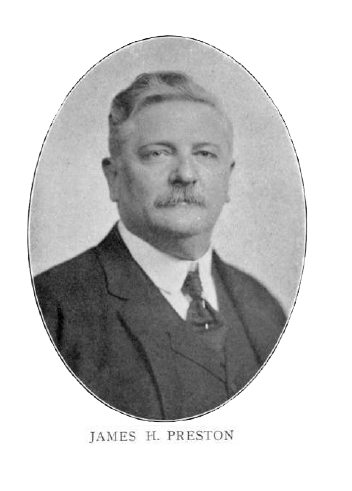
James H Preston
Thomas J Shryock
May 4 1908
Sherlock Swann
John B A Wheltle
Peter E Tome
May 2 1910
John B A Wheltle
Peter E Tome
C Baker Clotworthy
April 4 1912
John B A Wheltle
Peter E Tome
Morris A Soper
May 6 1912
Morris A Soper
Daniel C Ammidon
Alfred S Niles
Dec 31 1913
James McEvoy
Daniel C Ammidon
Alfred S Niles
Dec 28 1914
Daniel C Ammidon
Clarendon I T Gould
Alfred S Niles
March 22 1916
Lawrason Riggs
Daniel C Ammidon
Alfred S Niles
May 1 1916
Lawrason Riggs
Edward F Burke
Daniel C Ammidon

 Baltimore City Police Commissioners 

  • Charles Howard, 1850-1861 
  • Nicholas L.Wood, 1862-1864 
  • Samuel Hindes, 1864-1866
  • James Young, 1866-1867
  • LeFevre Jarrett, 1867-1870
  • John W. Davis, 1870-1871
  • William H.B. Fusselbaugh, 1871-1881
  • George Colton, 1881-1887
  • Edson M. Schryver, 1887-1897
  • Daniel C. Heddinger, 1897-1900
  • George M. Upsher, 1900-1904
  • James H. Preston, 1904-1908 (Gov. Warfield made him a member of the Board of Police Commissioners for Baltimore City, 1904-08)
  • George R. Willis, 1904-1908
  • Sherlock Swann, 1908-1910
  • John B.A. Wheltle, 1910-1912
  • Morris A. Soper, 1912-1913
  • James McEvoy, 1913-1914
  • Daniel C. Ammidon, 1914-1916
  • Lawrason Riggs, 1916-1920
  • Charles D. Gaither, 1920-1937
  • William Lawson, 1937-1938
  • Robert F. Stanton, 1938-1943
  • Hamilton R. Atkinson, 1943-1949
  • Beverly Ober, 1949-1955
  • James M. Hepbron, 1955-1961
  • Bernard Schmidt, 1961-1966
  • Donald Pomerleau, 1966-1981
  • Frank Battaglia, 1981-1984
  • Bishop Robinson, 1984-1987
  • Edward J. Tilghman, 1987-1989
  • Edward V. Woods, 1989-1993
  • Thomas C. Frazier, 1994-1999
  • Ronald L.Daniel, 2000
  • Edward Norris, 2000-2002
  • Kevin Clark, 2003-2004
  • Leonard Hamm, 2004-2007
  • Frederick Bealefeld III, 2007-2012
  • Anthony W. Batts 2012 - 2015
  • Kevin Davis 2015 - 2018
  • Darryl D. DeSousa 2018
  • Gary Tuggle 2018 - 2019
  • Michael Harrison 2019 – Present


commissioner john quincy adams robson

The Honorable John Quincy Adams Robson

1840
 
 
HOWARD
Charles Howard
1850-1861
 
Hindes
Samuel Hindes
1864-1899
 
YOUNG
James Young
1866-1867
 
JARRETT
Le fevre Jarrett
1867-1870
DAVIS.jpg.w560h630
John W. Davis
1870-1871
Maj  Harry Gilmore C S A - NARA - 529239
Harry W. Gilmor
1874 to 1879
COLTON
 

Gaither
Charles D. Gaither
1920-1937
   
Lawson
William Lawson
1937-1938
14416 stanton sup bench
Robert F. Stanton
1938-1943 
Hamilton
Hamilton R. Atkinson
1943-1949
Ober
Beverly Ober
1949-1955

Hepbron

James M. Hepbron
1955 - 1961
Schmidt
Interim  Bernard Schmidt
1961-1966
Gelston
 
Maj, Gen, George M. Gelston
22 January, 1966 - 22 September, 1966
Pomerleau
Donald D. Pomerleau
1966-1981
Pomerleau2
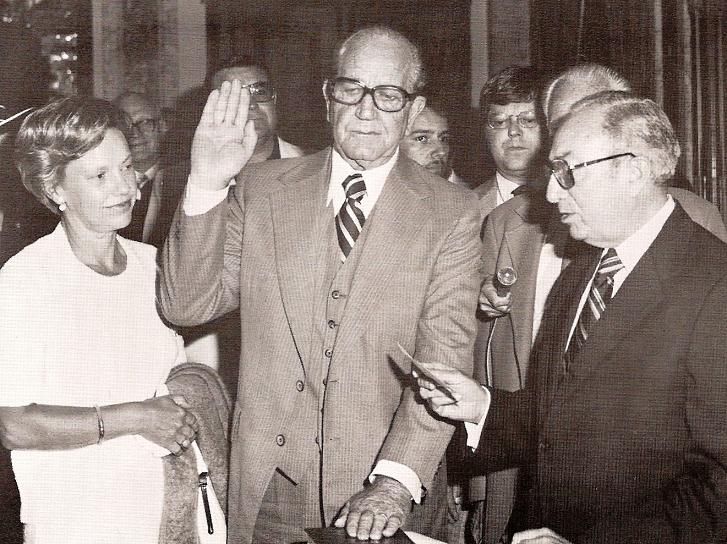
Donald D. Pomerleau swearing-in for his 3rd. term.
June 14, 1978

Donald Pomerleau

Donald D. Pomerleau (August 31, 1915 – January 19, 1992) was the City Police Commissioner of Baltimore, Maryland from 1966 to 1981.

Commissioner Frank Bataglia
COURTESY OFFICER JOE WICZULIS
Frank J. Battaglia
1981-1984
Robinson Tilghman
Bishop L. Robinson (left)
1984-1987
Robinson TilghmanEdward J. Tilghman
1987-1989
Woods
Edward W. Woods
1989-1993
Frazier1
Thomas C. Frazier
1994-1999
Norris1
Edward T. Norris
2000-2002
Clark1
Kevin P. Clark
2003-2004
Hamm
Leonard D. Hamm
2004-2007
Bealefeld III
 
Frederick H. Bealefeld III
2007-2012

Batts
 
Anthony W. Batts
2012 - 8 July 2015
 
Davis

Interim Commissioner Kevin Davis
8 July 2015 - 19 Oct 2015
Commissioner Kevin Davis
19 Oct 2015 - 19 Jan 2018

21. Darryl De Sousa
Darryl D. DeSousa
January 2018 – May 2018
Gary Tuggle
Gary Tuggle

May 2018 - March 2019

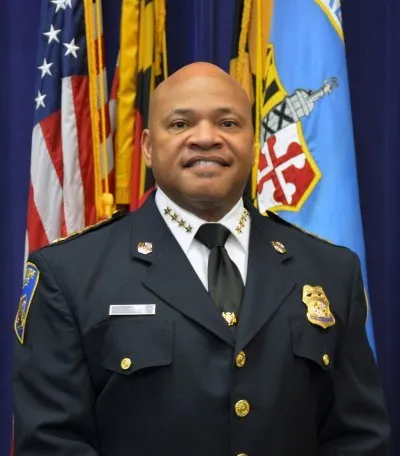
Michael Harrison
March 2019 – 8 June 2023

Richard Worley

Richard Worley 
Police Commissioner
8 June 2023 - Present

1 black devider 800 8 72

farnan Tom
Grand Master of Baltimore Cops
Marshal "Tom" Farnan

10 October 1909


Devider color with motto
 
Please contact Det. Ret. Kenny Driscoll if you have any pictures of you or your family members and wish them remembered here on this tribute site to Honor the fine men and women who have served with Honor and Distinction at the Baltimore Police Department. Anyone with information, photographs, memorabilia, or other "Baltimore City Police" items can contact Ret. Det. Kenny Driscoll at  This email address is being protected from spambots. You need JavaScript enabled to view it. follow us on Twitter @BaltoPoliceHist or like us on Facebook or mail pics to 8138 Dundalk Ave. Baltimore Md. 21222
 
 Copyright © 2002 Baltimore City Police History - Ret Det Kenny Driscoll
Officer Alonzo B. Bishop

Officer Alonzo B. Bishop

Sgt Benjamin Graham

Police Officer Alonzo B. Bishop 
CLICK HERE FOR AUDIO

On this day in Baltimore City Police History 29 August 1899 we lost our brother Police Officer Alonzo B. Bishop to the departments first ever traffic related death.

At the time Baltimore was a booming port city and accidents were a natural part of the busy streets of Baltimore. Western District’s Officer Alonzo B. Bishop and Wagon Driver William Smeak were patrolling the Western, a district of heavy footed drivers and rumbling street cars. The two were headed to answer a wagon call to call box #23 (Poppleton & Pratt) where they were to pick up a prisoner from an officer that had just made an arrest. As they began crossing Freemount Ave. they were struck by street car number #556 of the Freemount Ave. line. Those that witnessed the collision said it hit with such force that it lifted and threw the wagon across the street and into a telephone pole. Officer John Delaney was nearby and witnessed the accident, he quickly gained control of the wagon, and horses (In 1899 a wagon man operated horse drawn wagons) P/O Delaney righted the wagon, and with assistance from the public loaded both men into the wagon; he then drove them to University of Maryland Hospital (some things never change). Wagon man Smeak, was treated for non-life threatening injuries. Officer Bishop however was in agony, as he lay there in the hospital ER. Doctors at the time felt if they could operate they might be able to save his life, but he developed a Peritonitis, which is an inflammation of the thin tissue that lines the inner wall of the abdomen and covers most of the abdominal organs. Since Officer Bishop’s injuries were mostly abdominal surgery was impossible. He was in an unbearable pain as he lay there knowing there was nothing that could be done, and that he was waiting to die. His family by his side, he said his goodbyes, and died on this day 29 August 1899.

At the time of his death Officer Bishop was 42 years old, he was married, and had two grown sons Alonzo and John, and a grown daughter Bessie, all married.


1 black devider 800 8 72

POLICEMEN HURT

Aug 25, 1899;

Western District Patrol Wagon - Crew Badly Injured

Patrol Wagon Driver William Smeak and Reserve Officer Alonzo Bishop, of the Western police district, were thrown from the patrol wagon early this morning at Lexington and Fremont streets. Officer Bishop sustained n fractured skull and was otherwise Injured. Driver Smeak was injured internally. Both were taken to the Maryland University Hospital. Officer Bishop is not expected to live. The patrol wagon was crossing Fremont Street at Lexington when it was struck by car 536 of the McMechen street division of the United Railways and Electric Company.

The force of the car knocked the wagon into a telegraph post on the Southwest corner. The wagon was badly broken. The wagon was responding to a call from box 25, at Poppleton and Pratt streets. In going to this box it is customary to drive west on Lexington street and thence south on Poppleton street on account of the asphalt pavement. Before reaching cross streets the bell of the patrol wagon Is rung to notify wagons and cars of Its coming. The wagon passed over the east tracks on Fremont street and was half way across the west tracks, when it was struck by the car, which was bound south. Officer Bishop was thrown out first, as the car struck the rear wheel immediately behind where he was sitting. He fell on his head and was rendered unconscious. The force of the car raised the back of the wagon from the street, hurling it against the telegraph post. Drlver Smeak was thrown into the middle of the street. Patrolman John R. Delaney, who was on duty near the corner, went to the assistance of the injured men. He notified Lieutenant Kalbfielsch and then put the men in the wagon to take them to the hospital. Driver Smeak was conscious. He was unable to tell how the wagon was struck. Deputy Marshal Farnan and Captain Cadwallader were notified and both went to the hospital. Conductor Egbert P. Maynard and Motorman Robert S. Berry had charge of the car. Neither would make a statement. The dashboard of the car was demolished. After taking the men to the hospital Patrolman Delancy answered the call at box 25, which was for a colored man charged with being drunk and disorderly. Driver Smeak is considered one of the best hostlers in the employ of the Police Department. He is unmarried and lives at 706 West Lexington Street. He was appointed a patrolman April 2, 1887, and has been In charge of the wagon at the Western Station since the patrol system was put into use, about nine years ago. He is careful and attentive to his work. He Is 43 years old. Officer Bishop was born in Baltimore in 1830. He was appointed a patrolman on August 19, 1886, and since his connection with the department figured in a number of important arrests. Of late years he has been reserve officer at the Western Station at night, and went with the wagon on all calls. He is married and lives at 1307 North Gilmor street.


1 black devider 800 8 72

OFFICER BISHOP DEAD

Aug 30, 1899;

Injuries He Received In A Collision. Prove Fatal Reserve Officer Alonzo Bishop, of the Western Police District, who was injured last Thursday night in a collusion between the patrol wagon and a car of the Fremont avenue line, died early yesterday morning at the Maryland University Hospital. His wife and son were with him at the time of his death. Previous to Monday some slight hopes of his recovery were entertained, but peritonitis set in during that day, and the fatal result was afterward expected. It was found that he would be unable to stand an operation for peritonitis, and none was made. An inquest will be held Sunday at l P.M. at the Western Police Station. Mr. Bishop was born in Baltimore in 1837.

He was reared and educated here, and went on the police force in 1886. His work as patrolman was very successful, and he was liked by all those associated with him. His widow, two sons John W. and Alonzo, both married and a married daughter, Mrs. Bessie Haugh, survive him. Mr. Bishop's home was at 1307 North Gilmor Street. As his brothers and sisters of the Baltimore Police Department we will not let him be forgotten, His service Honored the City of Baltimore, and the Baltimore Police Department may he rest in peace, and may God bless him.
1 black devider 800 8 72

More Details

NameDescription
End of Watch 29 August, 1899
City, St.     Fremont Street at Lexington
Panel Number 32-E: 15
Cause of Death      Fall
District Worked Western


1 black devider 800 8 72

POLICE INFORMATION

Copies of: Your Baltimore Police Department Class Photo, Pictures of our Officers, Vehicles, Equipment, Newspaper Articles relating to our department and or officers, Old Departmental Newsletters, Lookouts, Wanted Posters, and or Brochures. Information on Deceased Officers and anything that may help Preserve the History and Proud Traditions of this agency. Please contact Retired Detective Kenny Driscoll.

This email address is being protected from spambots. You need JavaScript enabled to view it.

Devider color with motto

NOTICE

How to Dispose of Old Police Items

Please contact Det. Ret. Kenny Driscoll if you have any pictures of you or your family members and wish them remembered here on this tribute site to Honor the fine men and women who have served with Honor and Distinction at the Baltimore Police Department.

Anyone with information, photographs, memorabilia, or other "Baltimore City Police" items can contact Ret. Det. Kenny Driscoll at This email address is being protected from spambots. You need JavaScript enabled to view it. follow us on Twitter @BaltoPoliceHist or like us on Facebook or mail pics to 8138 Dundalk Ave. Baltimore Md. 21222


Copyright © 2002 Baltimore City Police History - Ret Det Kenny Driscoll 

Sergeant Moog

Sergeant Moog

Sgt Benjamin GrahamSergeant James Robert Moog


28 February 1931

Sergeant Moog, City’s Oldest Officers, Dies

On Active Duty Until 10 Days Ago, He Was Policeman Nearly 50 Years

Sergeant James Robert Moog, the senior of all men in the Baltimore Police Department, a Morgan Cavalryman [**] during the Civil War, and founder of Baltimore Police Department's Mounted Police Unit circa 1888 died in Mercy Hospital late last night [27 February 1931] following an operation for appendicitis. In rare cases, a blunt trauma of the abdomen (BTA) can be a direct cause of appendicitis. Seeing as how this happened more than 85 years ago it would be hard to tell if this due to some kind of trauma at the stables, or from illness, all we know is it occurred while working and on a streetcar he began to suffer from what he thought was an attack of bronchial asthma but was later found to be or brought on a case of an acute appendicitis.  

Note: Animals are a common trigger of asthma symptoms. One might be allergic to just one animal or more than one. Often, it's cats, dogs or horses. This means that even if the sergeant had a horse he was younger and did not react to it, he could be allergic to horses now. Sometimes, even if one has been around an animal for their entire life without developing allergies, it's possible to become allergic in their later years. There are also studies that show active asthma could be an unrecognized risk factor for appendicitis, it has been noted with children and the elderly. I don't know if this is a line of duty or not, but given the fact that he served 50 years, he fought in the civil war, and after losing a foot, that they took off while he was awake and watching. After having his foot removed, he got a prosthetic and continued to work. I think it would be great to continue to remember Sgt Moog, I mean what an inspiration to hear of the toughness and dedication of this kind of police.  

If he had lived until April 11th of 1931 he would have completed 50 years in the police department, one of the very few men at the time to have accomplished that.  Detective Lieutenant Thomas F.  Login, died a year earlier, was one such a man.  Sergeant Moog was 86 years old when he died.

Became Ill on a Streetcar

He was on active duty until 10 days prior to his death and was in charge of the stables for the Mounted Division on South Frederick Street.  On the day he was stricken by an attack of bronchial asthma he was on a streetcar, he was taken from the streetcar on Eutaw Street and Druid Hill Avenue by an ambulance from the No. 7 Engine House to the hospital.  There his asthma developed into an acute case of appendicitis.

A widower, Sergeant Moog lived with his daughter, Miss Catherine Moog, head of the department of English of the Eastern High School, at 3807 Bonner road

Funeral on Monday

The funeral services took place from his home that following Monday afternoon.  His son was a member of the faculty of a Boston School of Music.  He also had a second daughter, Mrs. Augustine Patterson, that also lived in Bolton.

Sergeant Moog’s service with the department began in early 1886 where he was assigned to work the Northwest District.  He spent the greater part of half a century on horseback as a member of the Mounted Division patrolling it outlying sections, chiefly in the Northwest District.  A love of horses was a marked characteristic of him throughout his life.

Always Wore Uniform

He always wore his uniform, with a yellow marking of the Cavalry Division. (In early BPD history, uniformed officers wore their uniforms both on and off duty) For years he led the police platoon which rode at the head of processions, from those to honor visiting celebrities to the military processions which marked the participation of this country in the world war and the return of the troops from France.

A real trooper, he knew the nature of the horse, he was at ease in the saddle no matter how great the blaring of the band’s behind him or nervousness of his mount.

Foot Is Amputated

At the battle of Gettysburg, a bullet struck him in the foot.  Two years ago, (1929) after the passing of 60 some odd years, an infection developed in that foot and he was taken to Union Memorial Hospital.  There it was found to be necessary to have the foot amputated.

A survivor of the civil war, when anesthesia was not as common as they were in 1931, the Sergeant told the surgeons that he did not need an anesthetic, and to go ahead and take his foot off; in fact, he wanted to see it, anyway.  He was given a local anesthetic and the operation performed.

Since that time, he had not ridden a horse but remained in charge of the stables.  He had an artificial foot made and his short, strong figure, of the Sergeant walking with a cane, continued to be seen about the police building as he appeared there to make his daily reports, but since he could no longer ride, he was forced to use streetcars to get around the city.

1 black devider 800 8 72

moogPossibly taken in 1912 during the democratic convention here in Baltimore
The rider second from the left appears to me Sgt James Moog

Morgan Cavalryman Refers to John Hunt Morgan

1 Jun 1825 - 4 Sep 1864

John Hunt Morgan (June 1, 1825 – September 4, 1864) was a Confederate general in the American Civil War. In April 1862, he raised the 2nd Kentucky Cavalry Regiment, fought at Shiloh, and then launched a costly raid in Kentucky, which encouraged Braxton Bragg's invasion of that state. He also attacked the supply-lines of General William Rosecrans. In July 1863, he set out on a 1,000-mile raid into Indiana and Ohio, taking hundreds of prisoners. But after most of his men had been intercepted by Union gunboats, Morgan surrendered at Salineville, Ohio, the northernmost point ever reached by uniformed Confederates. The legendary "Morgan's Raid", which had been carried out against orders, gained no tactical advantage for the Confederacy, while the loss of his regiment proved a serious setback. Morgan escaped from his Union prison but his credibility was low, and he was restricted to minor operations. He was killed at Greeneville, Tennessee, in September 1864. Morgan was the brother-in-law of Confederate general A. P. Hill.

Like most Kentuckians, Morgan did not initially support secession. Immediately after Lincoln's election in November 1860, he wrote to his brother, Thomas Hunt Morgan, then a student at Kenyon College in northern Ohio, "Our State will not I hope secede I have no doubt but Lincoln will make a good President, at least we ought to give him a fair trial & then if he commits some overt act all the South will be a unit." By the following spring, Tom Morgan (who also had opposed Kentucky's secession) had transferred home to the Kentucky Military Institute and there began to support the Confederacy. Just before the Fourth of July, by way of a steamer from Louisville, he quietly left for Camp Boone, just across the Tennessee border, to enlist in the Kentucky State Guard. John stayed at home in Lexington to tend to his troubled business and his ailing wife. Becky Morgan finally died on July 21, 1861.

In September, Captain Morgan and his militia company went to Tennessee and joined the Confederate States Army. Morgan soon raised the 2nd Kentucky Cavalry Regiment and became its colonel on April 4, 1862.

Morgan and his cavalrymen fought at the Battle of Shiloh in April 1862, and he soon became a symbol to secessionists in their hopes for obtaining Kentucky for the Confederacy. A Louisiana writer, Robert D. Patrick, compared Morgan to Francis Marion and wrote that "a few thousands of such men as his would regain us Kentucky and Tennessee."

In his first Kentucky raid, Morgan left Knoxville on July 4, 1862, with almost 900 men and in three weeks swept through Kentucky, deep in the rear of Major General Don Carlos Buell's army. He reported the capture of 1,200 Federal soldiers, whom he paroled, acquired several hundred horses, and destroyed massive quantities of supplies. He unnerved Kentucky's Union military government, and President Abraham Lincoln received so many frantic appeals for help that he complained that "they are having a stampede in Kentucky." Historian Kenneth W. Noe wrote that Morgan's feat "in many ways surpassed J. E. B. Stuart's celebrated 'Ride around McClellan' and the Army of the Potomac the previous spring." The success of Morgan's raid was one of the key reasons that the Confederate Heartland Offensive of Braxton Bragg and Edmund Kirby Smith was launched later that fall, assuming that tens of thousands of Kentuckians would enlist in the Confederate Army if they invaded the state.

As a colonel, he was presented with a Palmetto Armory pistol by the widow of Brigadier General Barnard Elliott Bee Jr. That pistol is now owned by the Museum of the American Civil War.

Morgan was promoted to brigadier general (his highest rank) on December 11, 1862, though the Promotion Orders were not signed by President Davis until December 14, 1862. He received the thanks of the Confederate Congress on May 1, 1863, for his raids on the supply lines of Union Major General William S. Rosecrans in December and January, most notably his victory at the Battle of Hartsville on December 7.

On December 14, 1862, Morgan married Martha "Mattie" Ready, the daughter of Tennessee United States Representative Charles Ready and a cousin of William T. Haskell, another former U.S. representative from Tennessee.

Morgan's Raid

Hoping to divert Union troops and resources in conjunction with the twin Confederate operations of Vicksburg and Gettysburg in the summer of 1863, Morgan set off on the campaign that would become known as "Morgan's Raid". Morgan crossed the Ohio River and raided across southern Indiana and Ohio. At Corydon, Indiana, the raiders met 450 local Home Guard in a battle that resulted in eleven Confederates killed and five Home Guard killed.

In July, at Versailles, IN, while soldiers raided nearby militia and looted county and city treasuries, the jewels of the local masonic lodge were stolen. When Morgan, a Freemason, learned of the theft he recovered the jewels and returned them to the lodge the following day.

After several more skirmishes, during which he captured and paroled thousands of Union soldiers[citation needed], Morgan's raid almost ended on July 19, 1863, at Buffington Island, Ohio, when approximately 700 of his men were captured while trying to cross the Ohio River into West Virginia. Intercepted by Union gunboats, less than 200 of his men succeeded in crossing. Most of Morgan's men captured that day spent the rest of the war in the infamous Camp Douglas Prisoner of War camp in Chicago, which had a very high death rate. On July 26, near Salineville, Ohio, Morgan and his exhausted, hungry and saddle-sore soldiers were finally forced to surrender. It was the farthest north that any uniformed Confederate troops would penetrate during the war.

On November 27, Morgan and six of his officers, most notably Thomas Hines, escaped from their cells in the Ohio Penitentiary by digging a tunnel from Hines' cell into the inner yard and then ascending a wall with a rope made from bunk coverlets and a bent poker iron. Morgan and three of his officers, shortly after midnight, boarded a train from the nearby Columbus train station and arrived in Cincinnati that morning. Morgan and Hines jumped from the train before reaching the depot and escaped into Kentucky by hiring a skiff to take them across the Ohio River. Through the assistance of sympathizers, they eventually made it to safety in the South. Coincidentally, the same day Morgan escaped, his wife gave birth to a daughter, who died shortly afterward before Morgan returned home.

Though Morgan's Raid was breathlessly followed by the Northern and Southern press and caused the Union leadership considerable concern, it is now regarded as little more than a showy but ultimately futile sidelight to the war. Furthermore, it was done in direct violation of his orders from General Braxton Bragg not to cross the river. Despite the raiders' best efforts, Union forces had amassed nearly 110,000 militia in Illinois, Indiana, and Ohio; dozens of United States Navy gunboats along the Ohio River ; and strong Federal cavalry forces, which doomed the raid from the beginning. The cost of the raid to the Federals was extensive, with claims for compensation still being filed against the U.S. government well into the early 20th century. However, the Confederacy's loss of Morgan's light cavalry far outweighed the benefits.


The Baltimore Sun Thu Aug 27 1903 72

Click to Open a Full Size Pic of This File

The Evening Sun Sat Feb 28 1931 72

Click to Open a Full Size Pic of This File 
Increased risk of appendectomy in patients with asthma HERE

Moog

Sergeant Jams R. Moog

Click on any of the following articles about Sergeant Moog

Exciting Runaway – 12 July 1895

"Finest" Really Fine?   16 May 1905  

Policeman’s Pocket Picked – 30 July 1915

Old Mounted Policeman Sees Horse Still Useful  10 April 1925

Department “Youngsters” Top Service Age Records   2 Dec 1927

Band Honoring Police Vets – 29 June 1930

James R. Moog – 28 Feb 1931

Police Department’s Oldest Member Dies – 1 May 1931  

Police Horse Live In Shadow of the Block – 30 Aug 1962


1 black devider 800 8 72

POLICE INFORMATION

Copies of: Your Baltimore Police Department Class Photo, Pictures of our Officers, Vehicles, Equipment, Newspaper Articles relating to our department and or officers, Old Departmental Newsletters, Lookouts, Wanted Posters, and or Brochures. Information on Deceased Officers and anything that may help Preserve the History and Proud Traditions of this agency. Please contact Retired Detective Kenny Driscoll.

This email address is being protected from spambots. You need JavaScript enabled to view it.

Devider color with motto

NOTICE

How to Dispose of Old Police Items

Please contact Det. Ret. Kenny Driscoll if you have any pictures of you or your family members and wish them remembered here on this tribute site to Honor the fine men and women who have served with Honor and Distinction at the Baltimore Police Department.

Anyone with information, photographs, memorabilia, or other "Baltimore City Police" items can contact Ret. Det. Kenny Driscoll at This email address is being protected from spambots. You need JavaScript enabled to view it. follow us on Twitter @BaltoPoliceHist or like us on Facebook or mail pics to 8138 Dundalk Ave. Baltimore Md. 21222


Copyright © 2002 Baltimore City Police History - Ret Det Kenny Driscoll 

Police Officer Benjamin Benton

Police Officer Benjamin Benton


Sgt Benjamin Graham

Benjamin Benton 
CLICK HERE FOR AUDIO

On this day in Baltimore City Police History 22 Sept 1858 we lost our Brother Police Officer Benjamin Benton to gunfire based on the following:

News reports would write - A Police Officer is Shot Dead - The Western Quarter of the city on Wednesday night was the scene of an affray, (a scuffle) the result of which was the instant killing of police officer Benjamin Benton, of the Western District, by a single shot from a pistol in the hands of a man named Henry Gambrill, (Henry Gambrill was the keeper of a public house on Franklin street, near Howard street.) It appears that a dance or some other kind of amusement was going on in the house on Biddle street, near Pennsylvania avenue. A number of disorderly characters were among those present, and about 11:30PM officer Burke, of that beat, apprehending a disturbance, gave the usual “Double Rap” for assistance, (Note; the “double rap” refers to striking an officers baton (Espantoon) against any solid building, downspout or cobblestone street to summons other officers in the area to come help him – (Basically the “Double Rap” was 1858’s version of a 10-16 just a step above a sig 13) Burk was joined by his brother “Officers Benton”, (the deceased) Rigdon, and Brown, who seized two of the party – “David Houck and John Isenhart” – at the request of the proprietor of the house, and attempted to take them to the station-house. Benton and Rigdon had hold of Houck, and while struggling with him, Gambrill interfered, and after threatening to knock Benton down, stepped back several paces, leveling a revolver within three feet of Benton’s head, fired. The ball entered immediately back of the left ear, and passing entirely through the neck, came out at the right ear, almost in line with its entrance. Benton released hold on Houck, and fell dead, the ball having severed the spinal cord and cut the base of the brain away. - Gambrill escaped, but was afterwards arrested by Captain Linaweaver, and locked up with Houck and Isenhart at the western on Pine Street station…

The investigation was concluded at about three o’clock yesterday morning, when the jury rendered the verdict that the deceased, Benjamin Benton, came to his death from a ball fired from a pistol in the hands of Henry Gambrill, who was immediately committed to jail by Justice Logan for the action of the grand jury… Mr. Benton was connected with the police department for eight years past and was retained through several administrations, which intervened on the account of his excellent qualities as an officer. He was about 45 years of age, and leaves a wife and five children. The Widow of Officer Benton. - The first branch of the council last evening adopted a resolution to pay the widow of police officer Benjamin Benton, killed on Wednesday night in the discharge of his duty, $520, or one year’s salary. Note; Mr. Gambrill was sentenced “to be hanged by the neck until he be dead.”

As his brothers and sisters of the Baltimore Police Department we will not let him be forgotten. His service Honored the City of Baltimore, and the Police Department. RIP Officer Benjamin Benton

1 black devider 800 8 72More Details

NameDescription
End of Watch 22 September, 1858
City, St. Franklin street, near Howard street
Panel Number 35-E: 21
Cause of Death Gunfire
Weapon - Handgun
District Worked Western


1 black devider 800 8 72

POLICE INFORMATION

Copies of: Your Baltimore Police Department Class Photo, Pictures of our Officers, Vehicles, Equipment, Newspaper Articles relating to our department and or officers, Old Departmental Newsletters, Lookouts, Wanted Posters, and or Brochures. Information on Deceased Officers and anything that may help Preserve the History and Proud Traditions of this agency. Please contact Retired Detective Kenny Driscoll.

This email address is being protected from spambots. You need JavaScript enabled to view it.

Devider color with motto

NOTICE

How to Dispose of Old Police Items

Please contact Det. Ret. Kenny Driscoll if you have any pictures of you or your family members and wish them remembered here on this tribute site to Honor the fine men and women who have served with Honor and Distinction at the Baltimore Police Department.

Anyone with information, photographs, memorabilia, or other "Baltimore City Police" items can contact Ret. Det. Kenny Driscoll at This email address is being protected from spambots. You need JavaScript enabled to view it. follow us on Twitter @BaltoPoliceHist or like us on Facebook or mail pics to 8138 Dundalk Ave. Baltimore Md. 21222


Copyright © 2002 Baltimore City Police History - Ret Det Kenny Driscoll 

Officer William A. Bell

Officer William A. Bell


Sgt Benjamin Graham

William A. Bell  
CLICK HERE FOR AUDIO

On this day in Baltimore Police History 2 Jan 1932 we lost our brother Officer William A. Bell - Officer Bell was shot and killed instantly on 2 January, 1932, while trying to arrest a burglary suspect, Willie Wright, in a 3rd floor apartment at 1709 Madison Avenue. The suspect was wanted for a series of burglaries in the Northwestern District. He was apprehended in Washington, D.C. on January 4, 1932. Officer Bell was 52 years old and unmarried. Officer Bell joined the department on October 1, 1908. We lost our brother Officer William A. Bell to gunfire based on the following – On 2 January, 1932, while attempting to arrest burglary suspect, Walter Wright, on a series of burglaries warrants in the Northwestern District; and while in a 3rd floor apartment located at 1709 Madison Avenue. The suspect opened fire on Officer Bell hitting him two times in the upper body, killing him instantly. The suspect jumped over Officer Bell’s lifeless body as he made his escape down a back set of stairs. When Officer Bell’s partner, Officer William Sempeck came in, he was slowed as he briefly stopped his pursuit to capture Suspect Walter Wright as he stopped momentarily to help Officer Bell to the ground, and render first aide, it was only after he realized the fate of his friend that he continued on in his chase for Walter Wright. Due to unfamiliar area, steep, long winding stairwell, Officer Sempeck would lose his suspect that night; he was quoted as saying, “He must’ve leaped down them, he got away so fast!” Wright would be arrested 2 days on 4 January 1932 while in Washington D.C.

The following are from two newspaper articles dated, 3 Jan 1932 and, 26 Jan 1932. They wrote a little differently back then; so some words were changed to represent a more modern way of expressing events.

BLACK MALE HOLDS UP SUSPECT KILLED PATROLMAN

3 January 1932

Black Male Holds Up Suspect Kills Patrolman, William A Bell - 52

The Death in an Apartment House - Assailant Jumps Over Body, and Flees - Wilbur Wright, Accused by Police, is Sought Throughout The City - Patrolman William a Bell, 52 was shot and instantly killed shortly before 9 o’clock last night (2 January 1932) by a Black male believed by the police to a been Wilbert Wright. - William Bell and Patrolman William Sempeck were about to make the arrest in the third floor apartment at 1709 Madison Avenue.- The Black male jumped over the body of Policeman Bell as Patrolman Sempeck chased him down three flights of narrow, winding stairs. He escaped before his pursuer had a chance to fire a single shot.

WRIGHT IS HOLD UP SUSPECT

Wright, a suspect in a series of holdups and robberies in the northern section of the city, is said to have killed Bell as the patrolman was standing guard at one of the doors to the apartment in which detectives asserted they had learned the suspect (Wright) was visiting. Patrolman Sempeck had gone to a door about 20 feet from the stair landing in the hall and Bell had stationed himself at a door to the apartment near the stairway. Sempeck said he entered the apartment, and as he was walking through a dark room heard a shot.

SAW VICTIM FALLING

He said he then ran to the living room in the apartment, and saw Officer Bell falling to the floor in the doorway. A Black Male was leaping over Officer Bell’s body, while two black females, and a man stood huddled in a corner. “I tried to catch Bell as he was falling.” Sempeck said, “Then I laid him on the floor and started after Wright who was already running down the rear stairs. He must’ve leaped down them, he got away so fast.”

POLICE DRAGNET SPREAD

In a few minutes a score of policeman from the Northwest District Station and a detailed Detective from Headquarters had reached the scene. Every police station in the city was notified of the killing and a police dragnet was spread in an effort to capture the killer. Police headquarters in Washington and other nearby cities also were told of the shooting and asked to watch for the fleeing suspect. Policeman looked for the fugitive at railway stations and area wharfs. Charles D Gaither, Police Commissioner, announced that he personally would give a $250 reward for information leading to the arrest of the killer.

OCCUPANTS ARREST

The three occupants of the apartment at which the shooting occurred were arrested and held as states witnesses they were Dorothy Paulson, 29, who lived in the building, Andrew Walker, 29, who also lived in the building, and Katherine Dobson, 23 from the 1500 block of McCulloch Street. Detectives found two guns – a .45 caliber automatic with a .45 caliber Army Revolver – both were in a white paper bag within the apartment. The residents of the neighborhood described Wright as a, “Bad man” and said he usually carries two pistols.

HELD WARRANT FOR ARREST

The police said they had been holding numerous wants for Wright’s arrest during the last few months. And that patrolman Bell had learned from an informant that Wright could be found in the Madison Avenue apartment house. The policeman had a warrant last night for Wright’s arrest in connection with a burglary in the 300 block of E. 25th St. Wright has served five years in the penitentiary. He was arrested for the first time September 27, 1918, for the theft of a bicycle and was paroled of by Judge John J Dobler. In April 1919, he was sentenced to six months in the house of corrections for purse snatching.

SENTENCED TO PEN

He was sentenced to the pen in 1923 on charges of burglary, larceny and carrying concealed weapons. He received five years on each count, to be served at concurrently. He appears in police records under various aliases – Walter Brian, James Wheatley, PD right and William Taylor. The shooting attracted hundreds of persons, and the police were originally hampered in their investigation by the milling crowd.

BLACK MALE DESCRIBED

Wright, a light-skinned Black Male, is about 5’5” tall and weighs about 135 pounds. Patrolman Sempeck said the Black Male who fled the shooting was wearing light trousers, but had no coat or hat, when he fled. Norbert Norris, 26, a taxicab driver living in the 2200 block of E. Fayette St., said he picked up a Black Male who answered Wrights description at McCulloch and Mosher streets about 15 minutes after the shooting this black male, however was wearing a hat and coat Norris said he took him to Madison and Bond Streets.

GAITHER OFFERS REWARD

In announcing the reward for Wright’s capture, Commissioner Gaither said, “It is a case of another policeman shot down in the performance of his duty, and just goes to show the Baltimore police are ready to make the supreme sacrifice at any time.” Gaither went on to say, “This man (Officer Bell) was one of the Boy Scouts” Patrolman Bell recently had been assigned to day shift, but last night was on a special detail because a large number of robberies, and holdups on the northern end of the city in the last few months.

APPOINTED IN 1908

Patrolman Bell was appointed to the police force on October 1, 1908. He is survived by his mother, Mrs. Emma Bell, and his sister, Mrs. Jeanette McGeoch. All lived at 2949 Clifton Ave. Patrolman Bell is also survived by two daughters, and a son. They are Mrs. Ruth King, of New York, Mrs. Naomi Bell and Edward Bell of this city

FIVE POLICEMAN KILLED BY BLACK MALES SINCE 1926

Five Northwestern district policemen have been fatally shot by black males since the summer of 1962. Patrolman Webster E Schuman and Thomas Dillon, clerk at the station house, were fatally injured by a crazed black male at Lafayette and Argyle Avenues, on June 28, 1926 seven other persons were injured at that time.

PATROLMAN KILLED

on August 5, 1927 patrolman William F Doehler was shot and killed by David Berry, a black male, as the officer, with the suspect in custody, waited for the patrol wagon at the corner of Pennsylvania Avenue and Biddle Street. The suspect in that case never was caught. Patrolman John P Burns was shot over the heart by Willie Smith, a black male, on January 26, 1931, as patrolman Burns, accompanied by another officer, attempted to arrest the black male in the house in the 500 block of St. Mary Street. Patrolman Burns died the following day. The suspect in that case was riddled with bullets as he fled the scene.

HONORED POSTHUMOUSLY

Last week Mrs. Margaret Burns was the recipient of the honor award intended for her husband. Gov. Ritchie made the presentation The following is the 2nd article

BLACK MALE CONVICTED OF KILLING OFFICER

Wright found guilty of First-Degree of Murder of Patrolman Bell - Sentence due soon - Death Penalty or Life Term Mandatory – Prisoner Visibly Affected by Verdict - Walter F Wright a Black Male who shot and killed patrolman William a Bell, of the Northwestern District, was found guilty of murder in the first degree late yesterday by Chief Judge Samuel K Dennis and Judge Duke bond. The verdict was announced following the trial of Wright in criminal court. Sentence was suspended to enable Wright to confer with his court-appointed counsel, Welford F Coyle Jr. Under Maryland law, the verdict makes either the Death Penalty or Life imprisonment mandatory.

SENTENCE TO BE IMPOSED

Unless a motion for a new trial is requested, sentence will be imposed before the end of the week. The verdict was announced after the judges had conferred for a few minutes in chambers. Wright, who had listened intently to the witnesses and the attorneys during the closing arguments, but without displaying any emotions, was affected visibly by the verdict.

KILLED A JANUARY 2

Patrolman Bell was killed January 2, when accompanied by Patrolman William Sempeck, he went to the third floor the house at 1704 Madison Avenue to arrest Wright, wanted on a warrant charging burglary, Wright fired while escaping and was caught the following day in Washington DC. Wright did not testify, but in a confession read into the record by the state, he said, Patrolman Bell fired first, apparently, however, without intending to hit anyone that he (Wright) then fired over his (Patrolman Bell’s) head, that patrolman Bell fired a shot at him, and that he then fired two more shots in the direction of the patrolman.

ENTRY HELD ILLEGAL

The defense contended that the facts as presented by the state failed to show premeditation, and that the patrolman illegally entered the Madison Street home and did not actually have the warrant for Wrights arrest in their possession. Charles C. G. Evans and William Carswell Baxter, assistant state’s attorneys, the prosecution argued that Wright, who lives in Washington, knew he was wanted by the police here and that he came to Baltimore armed with an automatic pistol and two revolvers.

FIRST-DEGREE VERDICT ASKED

The shooting was done by Wright in an attempt to escape justice, the prosecution held, and ask for verdict of first degree murder. Patrolman Bell was shot twice. The weapon used by right had been stolen from the home of a Washington patrolman. As his brothers and sisters of the Baltimore Police Department we will not let him be forgotten, His service Honored the City of Baltimore, and the Baltimore Police Department may he rest in peace, and may God bless him.

More Details

NameDescription
End of Watch January 2, 1932
City, St. Baltimore, 1709 Madison Avenue
Panel Number 41-E: 14
Cause of Death Gunfire
Weapon - Handgun
District Worked Northwestern


1 black devider 800 8 72

POLICE INFORMATION

Copies of: Your Baltimore Police Department Class Photo, Pictures of our Officers, Vehicles, Equipment, Newspaper Articles relating to our department and or officers, Old Departmental Newsletters, Lookouts, Wanted Posters, and or Brochures. Information on Deceased Officers and anything that may help Preserve the History and Proud Traditions of this agency. Please contact Retired Detective Kenny Driscoll.

This email address is being protected from spambots. You need JavaScript enabled to view it.

Devider color with motto

NOTICE

How to Dispose of Old Police Items

Please contact Det. Ret. Kenny Driscoll if you have any pictures of you or your family members and wish them remembered here on this tribute site to Honor the fine men and women who have served with Honor and Distinction at the Baltimore Police Department.

Anyone with information, photographs, memorabilia, or other "Baltimore City Police" items can contact Ret. Det. Kenny Driscoll at This email address is being protected from spambots. You need JavaScript enabled to view it. follow us on Twitter @BaltoPoliceHist or like us on Facebook or mail pics to 8138 Dundalk Ave. Baltimore Md. 21222


Copyright © 2002 Baltimore City Police History - Ret Det Kenny Driscoll 

 
Officer Nelson F. Bell

Officer Nelson F. Bell


Sgt Benjamin GrahamNelson F. Bell 
CLICK HERE FOR AUDIO 
CLICK HERE FOR AUDIO

On this day in Baltimore Police History 27 Oct 1978 we lost our Brother K9 Officer Nelson F. Bell to gunfire based on the following;

On October 22, 1978, shortly after 8:00 p.m. a security guard approached two Central District officers He stated that an armed man was menacing citizens at the rear of the Downtown Trailways Bus Terminal. The officers quickly passed through the crowded terminal and exited to the bus loading area where they confronted the suspect, who was armed with a rifle. As the suspect raised the weapon to a firing position, the Central Officers sought cover behind a parked bus. They then ordered the suspect to drop his weapon. He refused and continued to aim at one of the officers. At this point the officers fired as the suspected retreated into a dark shadow. The officers notified the dispatcher of the situation at hand. Other units immediately began responding, including K-9 Officer Nelson F. Bell. Officers who began arriving at the scene heard several shots and fellow officers pleading with the suspect to drop his weapon. As they inched their way through three narrow alleyways, which accessed the bus loading area, they observed the officers seeking cover as the suspect threatened them with various weapons.

The events were moving quickly, the suspect was not responding to the efforts of the officers who were trying to calm the situation. Two officers began climbing the nearby rooftop in an effort to obtain an advantageous position should additional application of deadly force become necessary. Before they could get to their destination, the suspect, armed with a bow and arrow, lunged at the officers. There was a volley of shots, involving several of the many officers who had responded. The suspect went down. Officers went to the suspect’s side in order to provide first aid. The suspect was dead. At this time, an officer noticed that Officer Bell had been shot. He sustained a massive head wound and lay bleeding thirty feet from the suspect.

He was transported to University of Maryland’s Shock Trauma Unit where teams of medical specialists worked to save his life. The injuries were too massive and he died on 27 Oct 1978 after five days of treatment. The question of where the fatal shot came from may never be answered. Officer Bell’s position was such that he was not in direct line of fire from any of those Officers who were involved in trying to ricocheting from the tall brick walls, which surrounded the bus loading area, may have found Officer Bell.

As his brothers and sisters of the Baltimore Police Department we will not let him be forgotten, His service Honored the City of Baltimore, and the Baltimore Police Department may he rest in peace, and may God bless him.

1 black devider 800 8 72More Details

NameDescription
End of Watch 27 October, 1978
City, St.      Downtown Trailways Bus Terminal
Panel Number 17-W: 16
Cause of Death      Gunfire
Weapon - Friendly Fire
District Worked K9


1 black devider 800 8 72

POLICE INFORMATION

Copies of: Your Baltimore Police Department Class Photo, Pictures of our Officers, Vehicles, Equipment, Newspaper Articles relating to our department and or officers, Old Departmental Newsletters, Lookouts, Wanted Posters, and or Brochures. Information on Deceased Officers and anything that may help Preserve the History and Proud Traditions of this agency. Please contact Retired Detective Kenny Driscoll.

This email address is being protected from spambots. You need JavaScript enabled to view it.

Devider color with motto

NOTICE

How to Dispose of Old Police Items

Please contact Det. Ret. Kenny Driscoll if you have any pictures of you or your family members and wish them remembered here on this tribute site to Honor the fine men and women who have served with Honor and Distinction at the Baltimore Police Department.  Anyone with information, photographs, memorabilia, or other "Baltimore City Police" items can contact Ret. Det. Kenny Driscoll at This email address is being protected from spambots. You need JavaScript enabled to view it. follow us on Twitter @BaltoPoliceHist or like us on Facebook or mail pics to 8138 Dundalk Ave. Baltimore Md. 21222


Copyright © 2002 Baltimore City Police History - Ret Det Kenny Driscoll 

How to Dispose of Old Police Items

logo

Please contact Det. Ret. Kenny Driscoll if you have any pictures of you or your family members and wish them remembered here on this tribute site to Honor the fine men and women who have served with Honor and Distinction at the Baltimore Police Department. Anyone with information, photographs, memorabilia, or other "Baltimore City Police" items can contact Ret. Det. Kenny Driscoll at   Kenny@BaltimoreCityPoliceHistory.com follow us on Twitter @BaltoPoliceHist or like us on Facebook or mail pics to 8138 Dundalk Ave. Baltimore Md. 21222.

NEWSLETTER

Subscribe now to get 100 exclusive photo & two newsletters per month